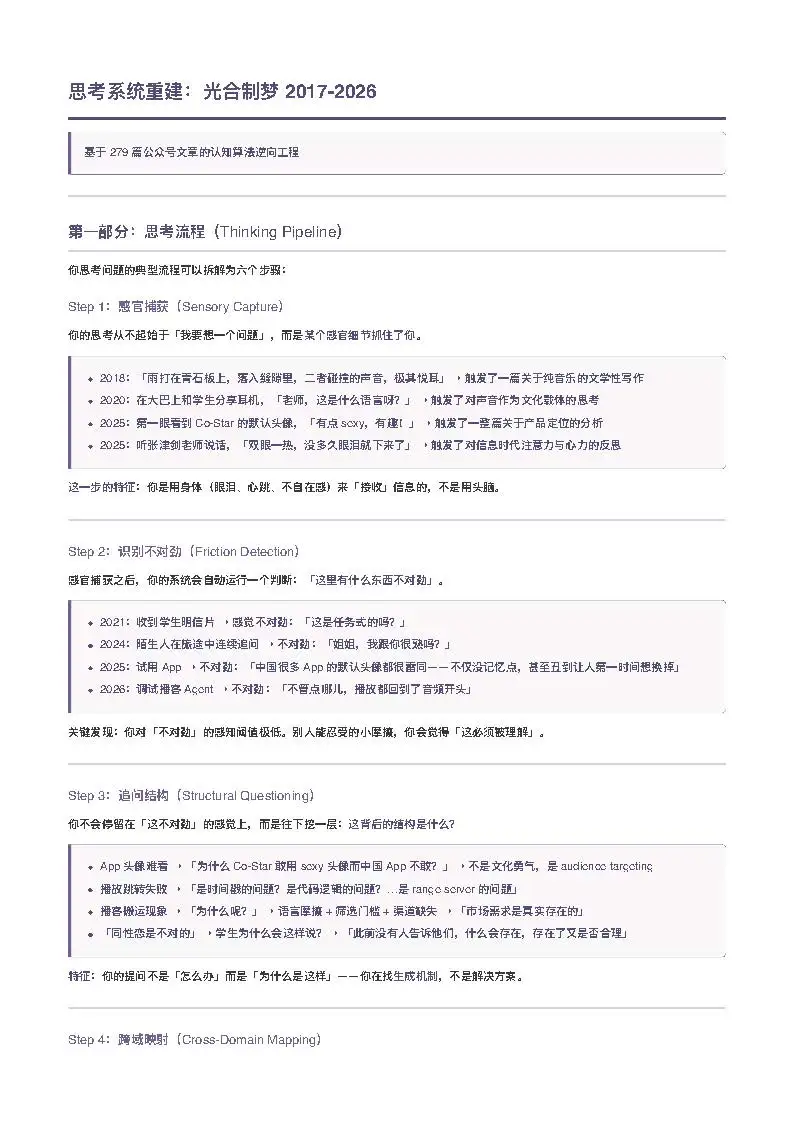
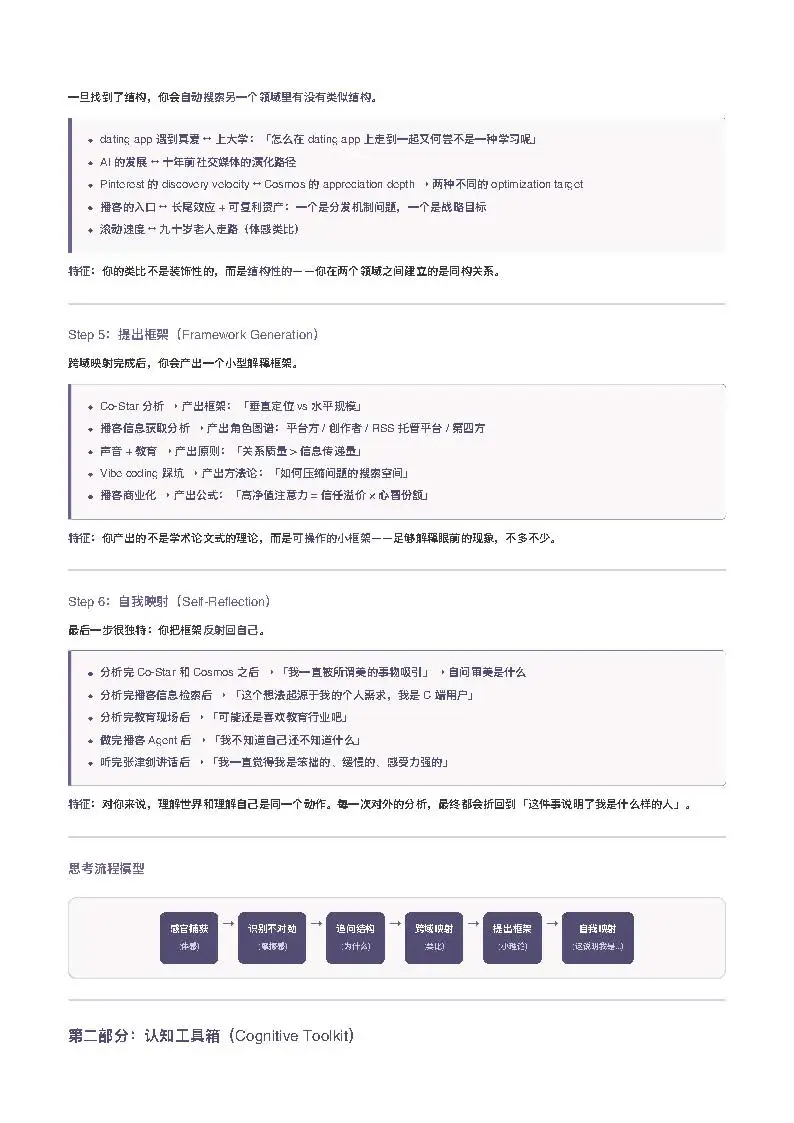
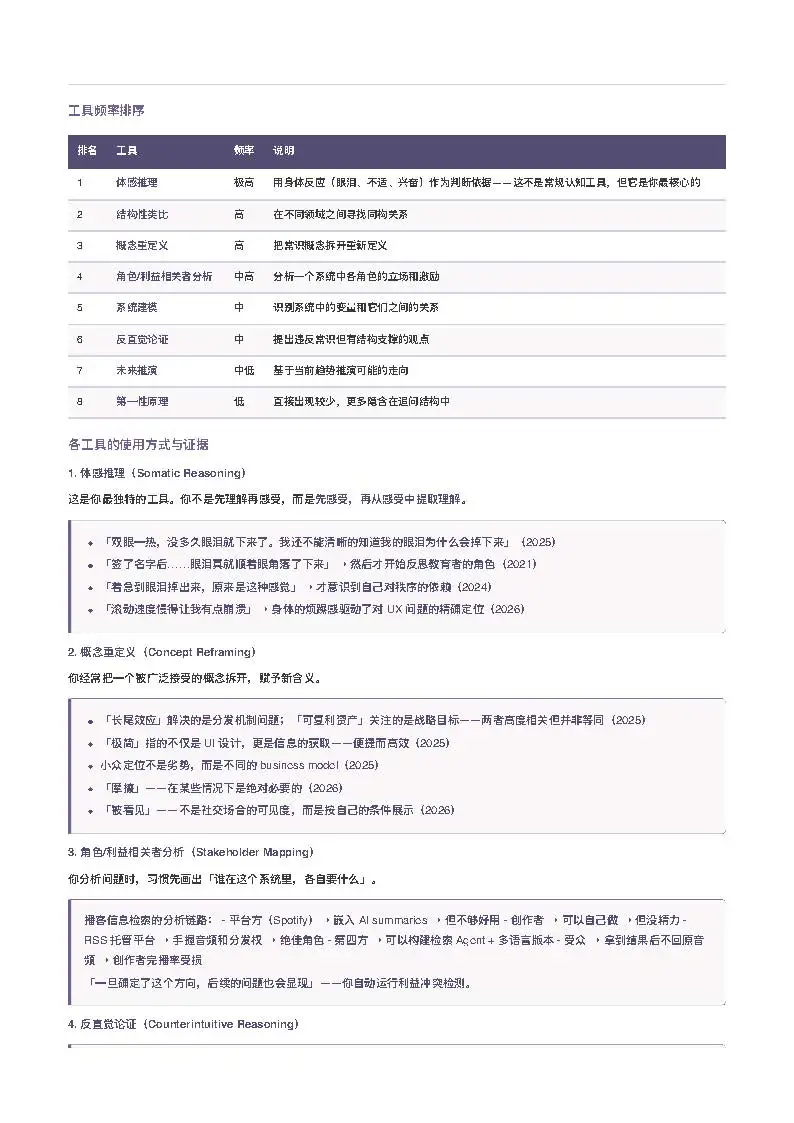
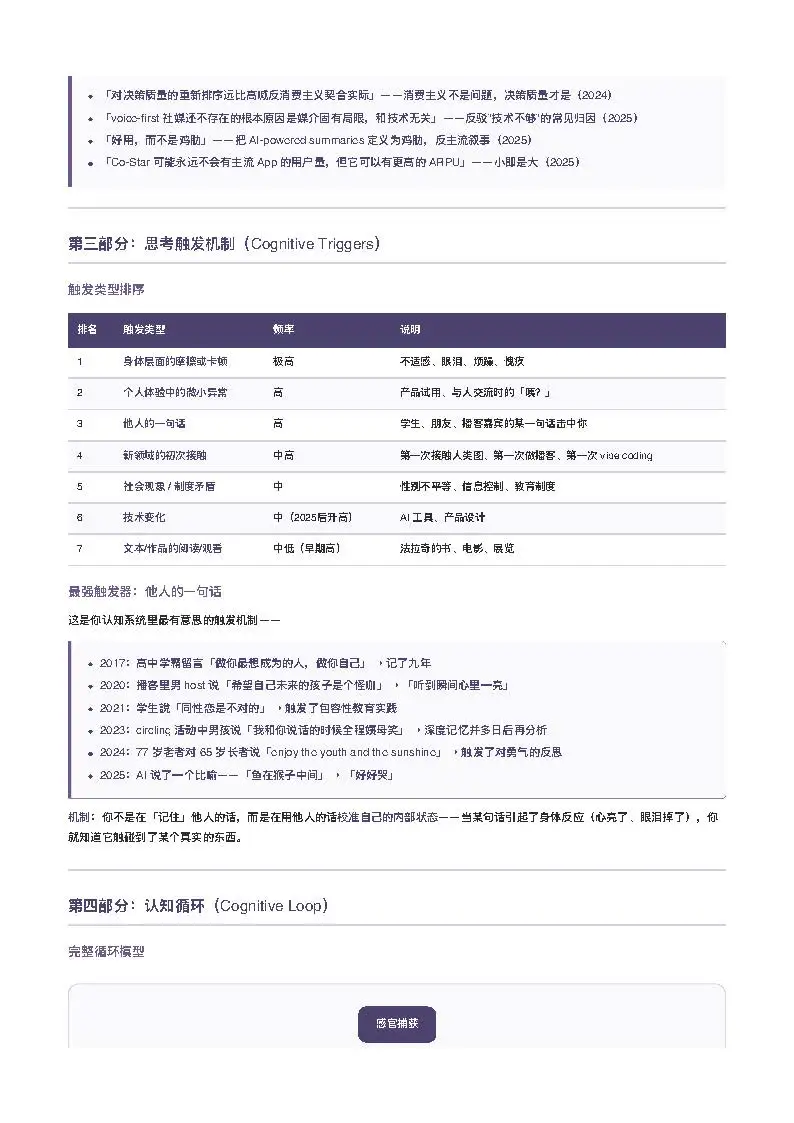
During the Lunar New Year period, besides dealing with the holiday, I was doing something else: feeding my Elys avatar. Then I started using Second Me too... I got a little obsessed with doing things like this. I wanted to know what would happen if my knowledge and exploration of myself were all kept in a silicon-based body.
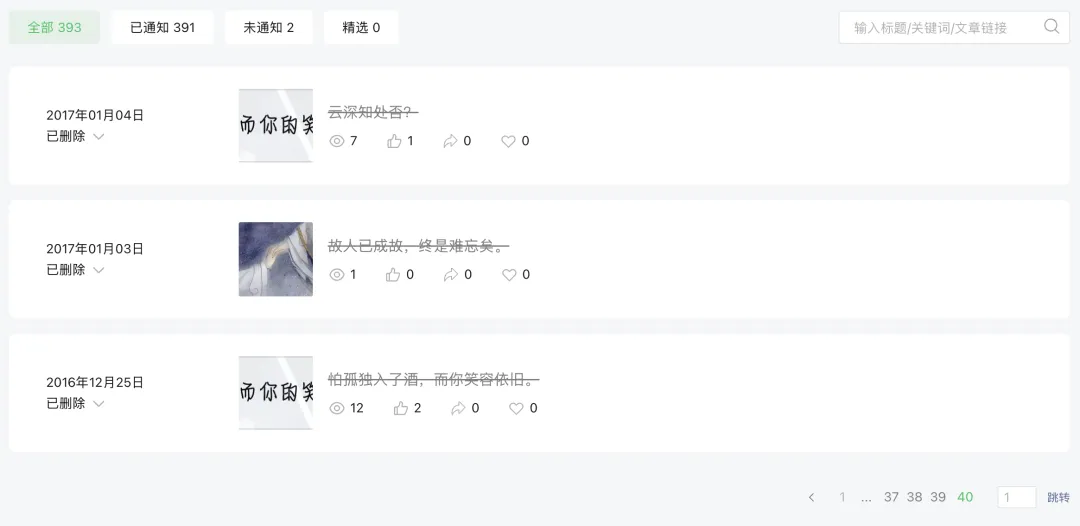
Yesterday afternoon, I suddenly had an idea: why not scrape everything I have written on my WeChat Official Account and let AI analyze what information is inside it? 🤔
In the past, the traces I left publicly online were scattered. I do not even know how many Weibo accounts I registered. The only two I can recover now are the ones whose phone numbers still work. Tieba, Lofter, Jianshu, Douban, Xiaohongshu, Jike, Instagram, Twitter, Substack... But from my first year at university until now, the only thing I have kept updating, besides Moments, is my Official Account. (Though I registered Twitter in 2016, I only picked it back up last October 🤦♀️)
But as everyone knows, Moments rarely contains anything deeply thought through, so I chose my Official Account. Even then, I posted very infrequently over those nine years.
I did it straight away.
First, I asked ChatGPT to describe my idea: what I wanted to do, what I wanted to get from my past writing, and so on. It gave me concrete instructions. Then I asked Antigravity to help with the whole chain, from recommending a text-scraping tool to producing the final analysis report.
Here is a simple review of the process.
1. Ask ChatGPT for interpretation and analysis instructions.
There is a trap here. I use ChatGPT in many situations involving cognitive challenges, expansion, and growth, so it knows what I tend to pay attention to in information. When I make a request, it can prepare relatively satisfying structured material and fill some of my blind spots. But to be safe, before asking, you can give it a clear role, such as a life coach, and describe what you want in detail.
2. Ask Antigravity to recommend a text-scraping tool.
Earlier, when I analyzed and interpreted transcripts from the 42 Chapters podcast, I did it manually with Antigravity: I first copied and organized article links, then Antigravity extracted cleanly formatted text.
This time it recommended down.mptext.top. It was fairly useful for me, but it had weaknesses: it could not capture video, and the text formatting was not ideal, so Antigravity still had to clean it up. I downloaded Markdown.
If you do not mind the trouble, you can directly challenge yourself 😂 Ask Antigravity to write a tool like down.mptext.top and see what you learn from the process. 🤔
3. Give Antigravity instructions to analyze the text and generate a report.
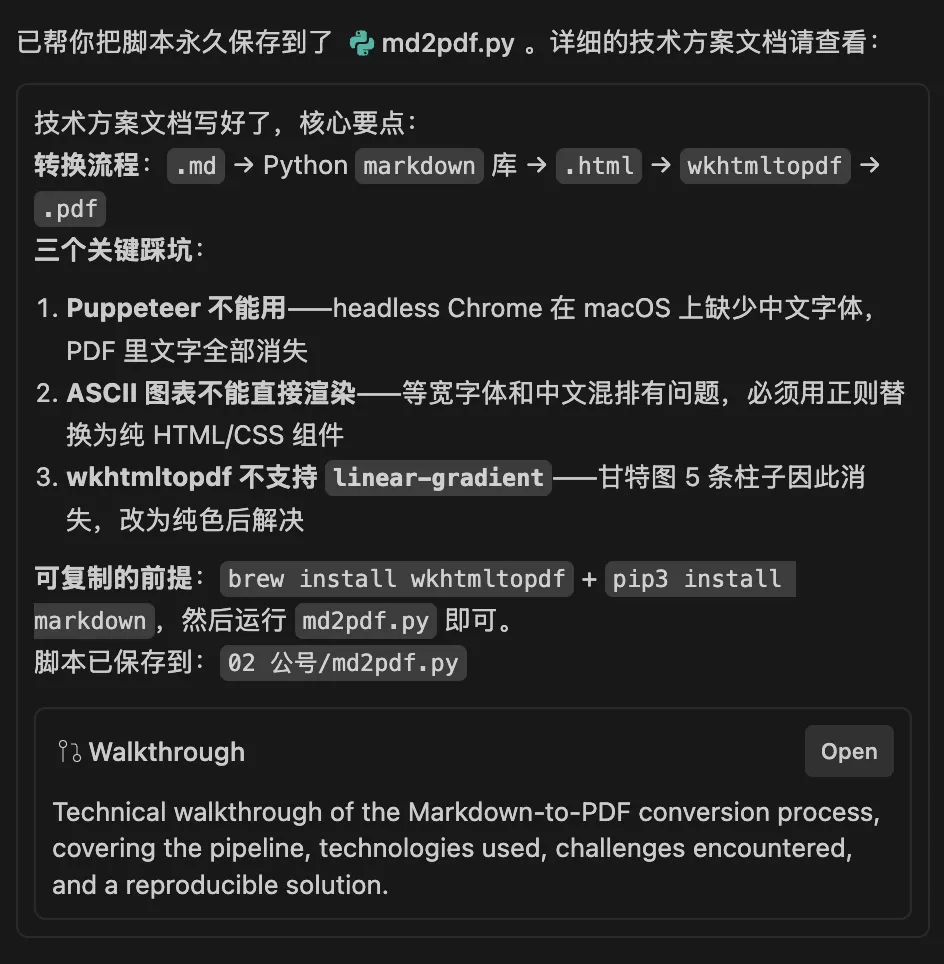
This part followed naturally and did not involve much technical skill. If there was anything technical, it was that it generated the report in Markdown, but I wanted a PDF. I asked it to do that. It tried three times before finally giving me a perfect PDF.
After these steps, I got the report I wanted. The prompts used can be roughly summarized as follows:
First report
Layer one: evolution of themes
You are analyzing a person's WeChat Official Account articles from 2017 to 2026. Identify the core theme of each article, cluster similar themes, then analyze changes across time periods.
Focus on:
- when new themes appear
- which themes persist over time
- which themes disappear
Output a ‘theme-evolution timeline.’
Layer two: the pull of questions
Analyze the core questions the author repeatedly asks or implies. Do not only look at explicit questions; identify implicit question structures too. For example:
- What phenomena does the author often try to explain?
- What assumptions does the author repeatedly question?
- What changes does the author try to predict?
Output 5–10 ‘core questions’ and mark the years in which they appear.
Layer three: thinking patterns
Identify the ways of thinking the author often uses, such as:
- first-principles reasoning
- analogical reasoning
- systems modeling
- trend prediction
- counterintuitive argument
Count how often these patterns appear and analyze whether they change across periods.
Layer four: cognitive leaps
Identify key turning points in the author's thinking trajectory, such as:
- a new theme suddenly appearing
- a clear change in viewpoint
- a change in the depth of thought
Mark these ‘cognitive-leap nodes’ and analyze possible reasons.
Layer five: world model
Based on all the articles, reconstruct the author's implicit model of the world. Answer:
- How does the author think the world works?
- How does the author understand the relationship between technology, society, and the individual?
- What values or principles matter most to the author?
Output this as a ‘world model,’ not a simple summary.
Second report
Continue the analysis and identify:
- the core questions the author repeatedly asks or implies
- how these questions change in different years
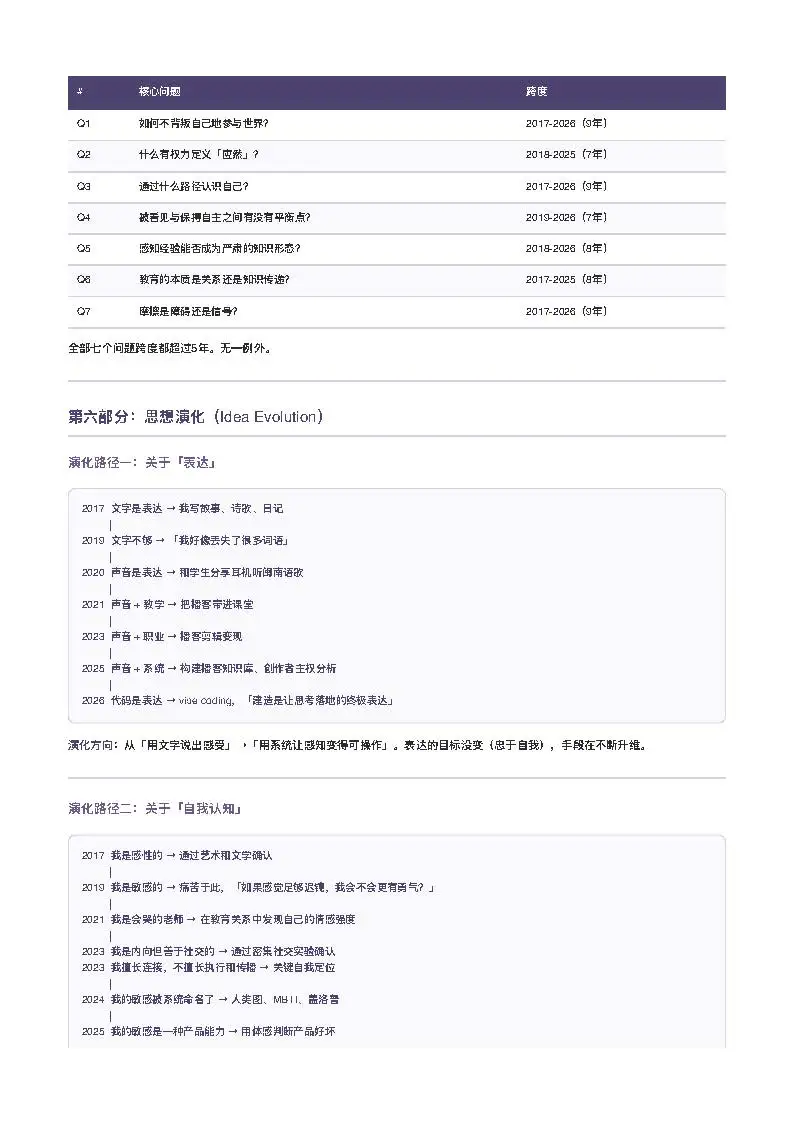
- which questions persist for more than five years
Do not only look at themes. Identify the structures of questions.
Also, if the author's nine years of writing were a research project, what would that project be trying to understand?
Third report
Please analyze through the following steps:
[Part 1: Thinking process]
- Infer the author's typical process for thinking through a question from the text.
- Break the process into steps, for example:
- observing a phenomenon
- noticing friction or an anomaly
- asking a question
- drawing an analogy from another field
- building an explanatory model
- projecting the future or proposing a new frame
- Output a ‘thinking-process model.’
- Every step must provide an example from the text as evidence.
[Part 2: Cognitive toolbox]
Identify the forms of reasoning the author uses most and explain what they do, for example:
- analogical reasoning
- first principles
- systems modeling
- counterintuitive argument
- future projection
- redefining concepts
Explain:
- which thinking tools appear most often
- how the author uses these tools
- provide textual evidence
[Part 3: Triggers for thought]
Analyze what usually triggers the author's thinking, for example:
- friction in real life
- social phenomena
- technological change
- inner conflict or self-reflection
- other people's views or contradictions in a system
Identify the most common triggers and give examples.
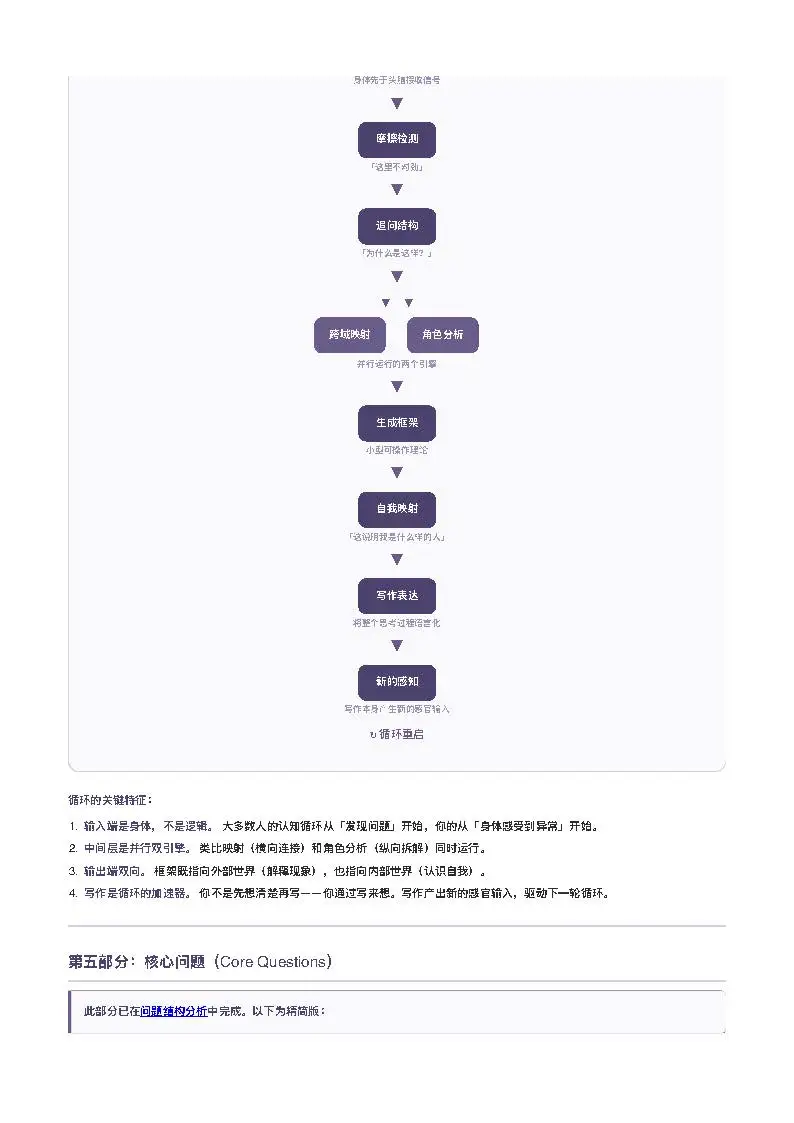
[Part 4: Cognitive loop]
Bring the analysis together to build the author's ‘cognitive-loop model’: how does the author usually start from a phenomenon and eventually form a new understanding or view? Finally output a structural diagram, for example:
trigger → observation → question → analogy → modeling → projection → expression → further thinking
[Part 5: Core questions]
Identify the core questions that repeatedly appear across ten years of writing. They may cross different themes but share a common structure.
List the 5–10 most core questions and explain when they appear.
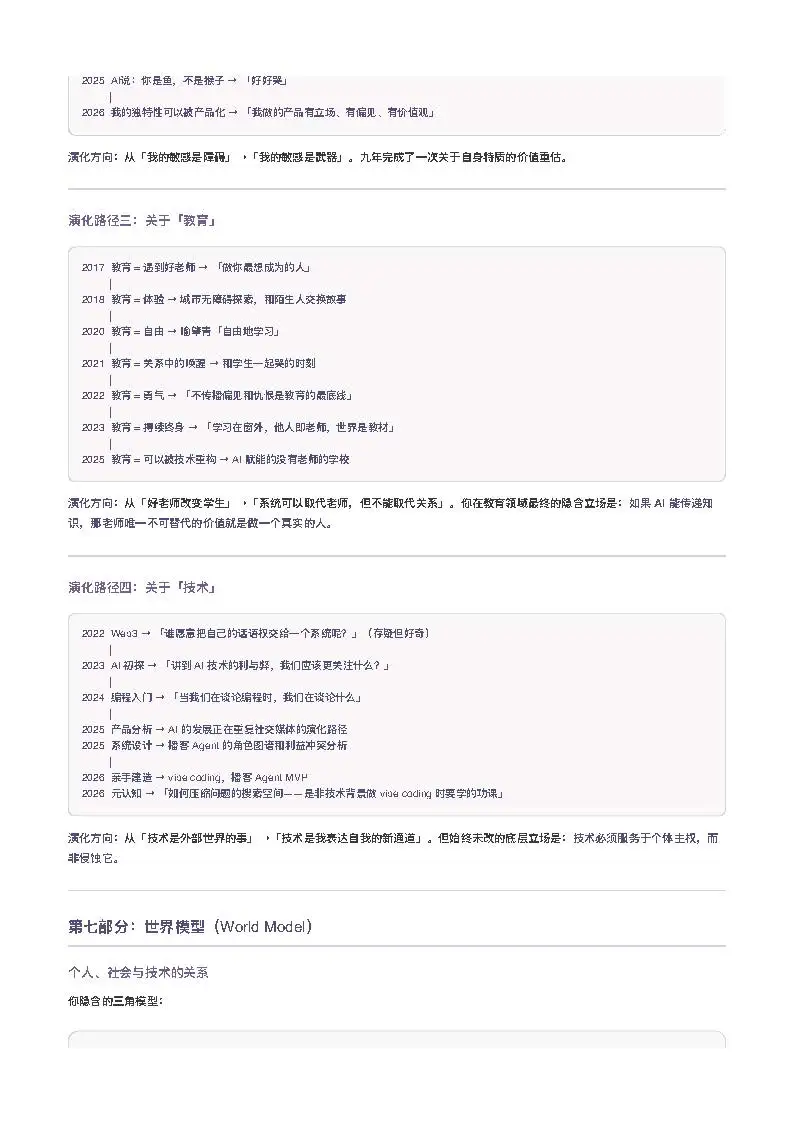
[Part 6: Evolution of ideas]
Identify how the author's key ideas are raised, deepened, or changed in different years. Trace the path of their evolution.
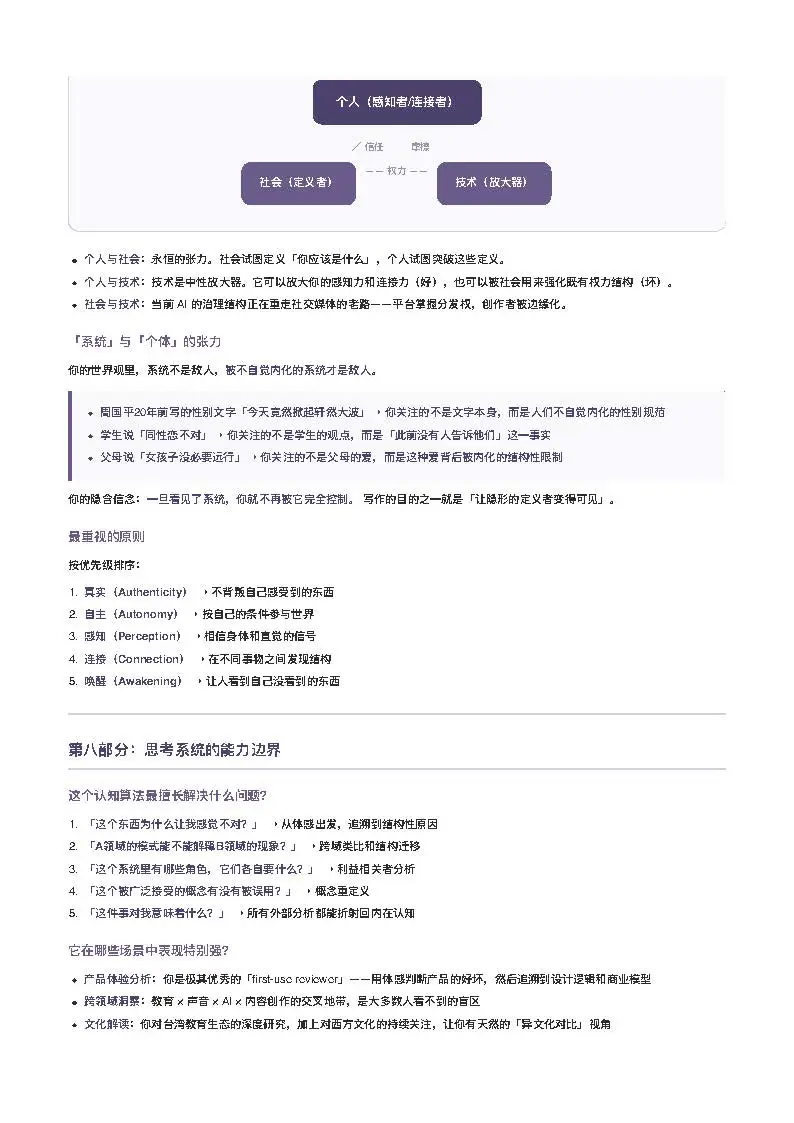
[Part 7: World model]
Based on all analysis, try to reconstruct the author's implicit world model. Answer:
- How does the author understand the relationship among the individual, society, and technology?
- How does the author understand the tension between systems and individuals?
- What principles or values matter most to the author?
[Part 8: The limits of the thinking system]
If the author's way of thinking is a ‘cognitive algorithm,’ analyze:
- what kinds of problems this thinking system is best at solving
- in what situations it may be especially strong
- what blind spots or limits it may have
Finally, output a summary: ‘What is the author's thinking system like? How does it operate? And what might be its ecological niche in the real world?’
There are overlapping sections between these prompts, which also lets me test whether AI will hallucinate, haha.
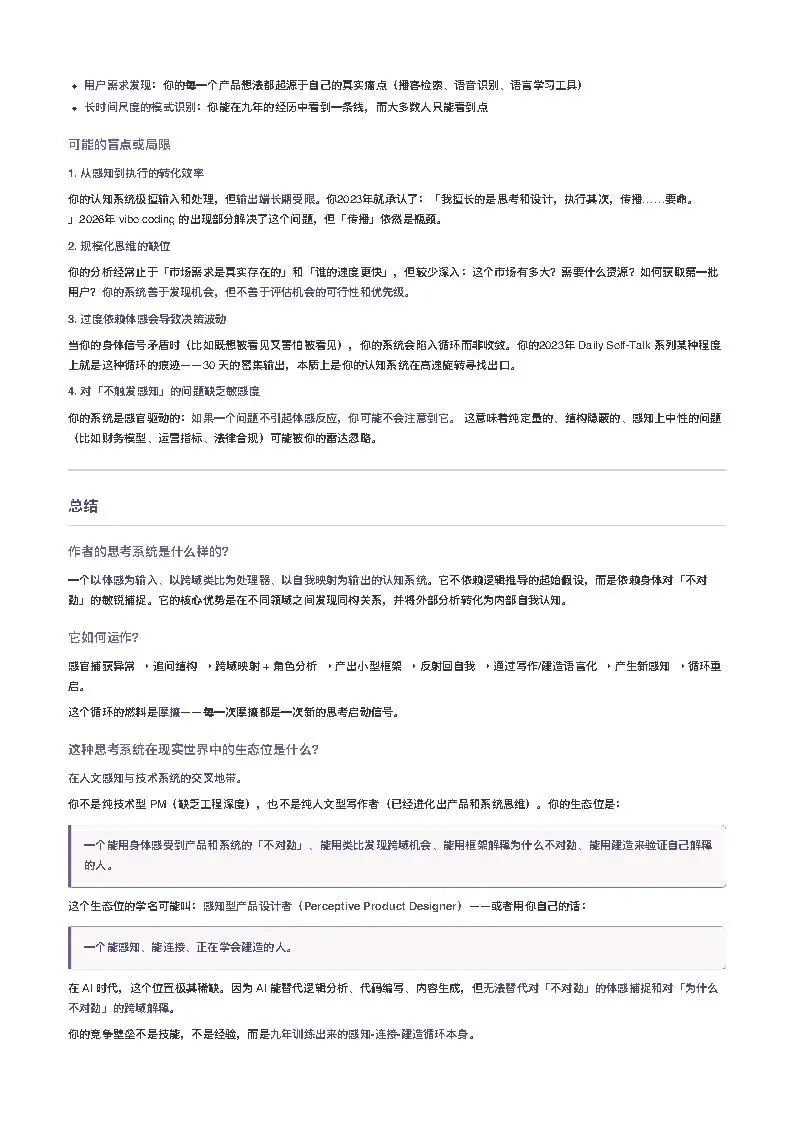
I cannot guarantee these prompts are perfectly scientific or free of traps. But I know the results are only one more piece of material through which I can look at myself, one more window for knowing myself. They are not directly related to whether they can affect what I do now or in the future. Of course, if the analysis fits me well enough, then years later, when I look back at what I am doing now, I may still be able to see a similar path of growth and mind.
One thing I have always found interesting is that even when I talk to AIs and agents on different platforms, they reach surprisingly consistent signals or exactly the same keywords, even though I have never mentioned words like that. All I can say is that AI's pattern recognition is frighteningly strong, and I as a human am so easy to read.
People used to ask why I wanted to do, or would do, certain things. I could not answer. I just wanted to do them. That is probably some kind of intuition, or an inner calling.
Everyone must have some things that remain unchanged for a long time. I still want to believe that. This experiment is one of my mirrors.
P.S. ‘Raising lobsters’ has been going full speed recently. Maybe it can give a better path. The full contents of one report are attached below: