I've tested a few apps and products lately. Some made my eyes light up; some drove me crazy.
Whether I'm complaining or praising them, I hope they can become better. As a user, who doesn't want a smoother experience?
While trying them, I realized that the visible experience problems often hide deeper product logic and market choices. So I wrote them down together.
1. Co-Star
I don't know that much about astrology. I came across this app simply because I wanted to look at more interesting products.
After signing up, before I had time to look closely at the content, the avatar caught my attention. My first thought was: maybe this is ordinary in the West, but for someone with my background, it feels a little sexy. Interesting!
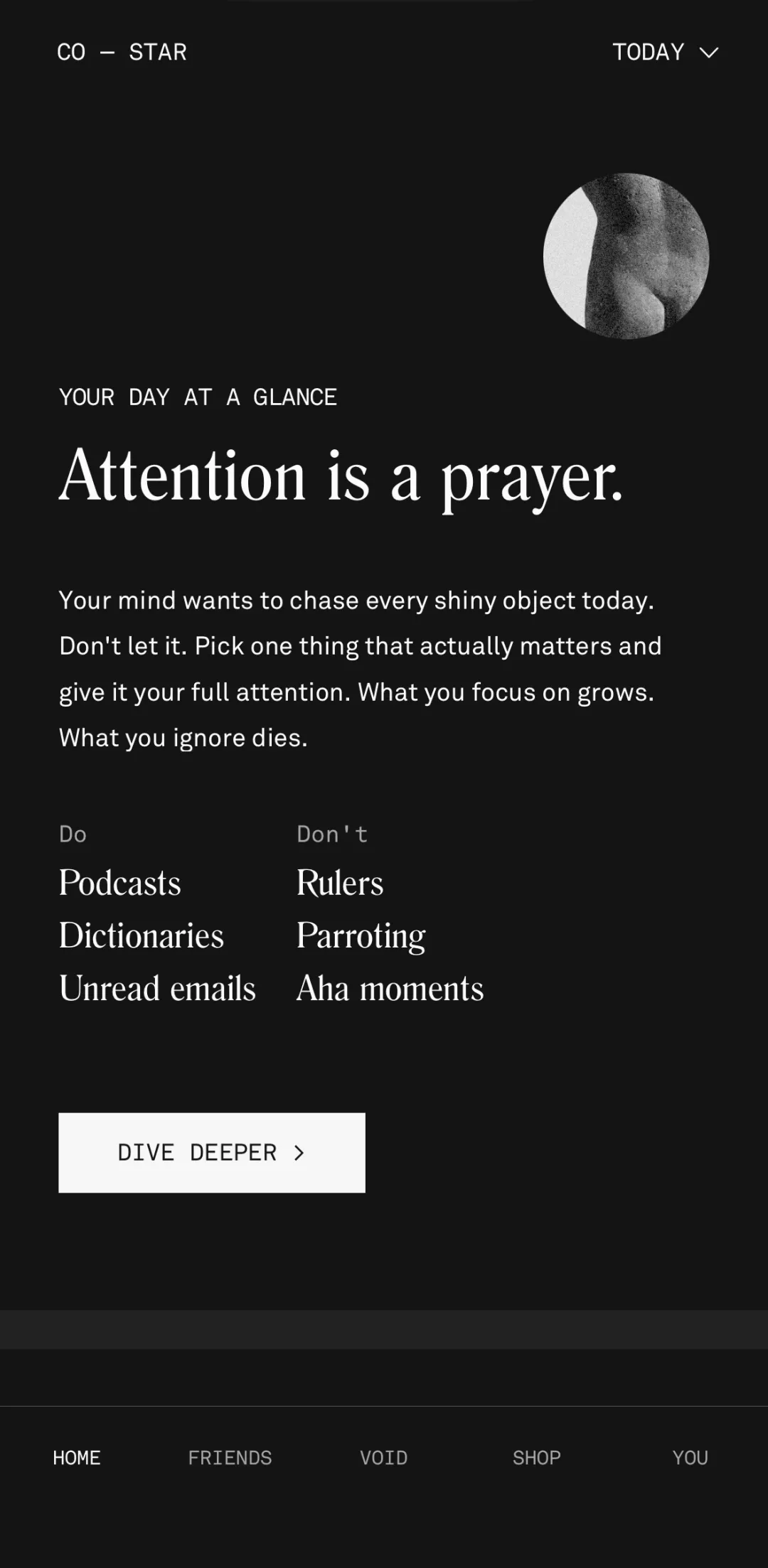
Our culture tends to play it safe. That is why so many default avatars in Chinese apps look alike. They are not memorable, and sometimes they are ugly enough to make you want to change them immediately.
To some extent, that may increase the time users spend interacting in the app. But I don't think that is what a good product manager should care about most.
So I wondered: why does Co-Star dare to do this?
On the surface, it looks like a cultural difference. Dig deeper, and it is really more precise audience targeting. Co-Star serves young, urban, liberal people who care about spiritual wellness. This demographic already accepts body positivity.
It may be less about cultural courage and more about accurate market segmentation.
By comparison, the ‘safe avatars’ in Chinese apps are not necessarily conservative. When a team serves more than 500 million daily active users, any polarizing element can hurt conversion. Behind it is really a question of unit economics.
Co-Star's strength is not only its refined black-and-white design. It is also this default avatar. Even if I don't use it often later, I will remember how I felt when I first saw it. That kind of memory is a brand asset other apps cannot easily replace.
I think a niche position is not a weakness. It is a different business model. Co-Star may never have the user numbers of a mainstream astrology app, but it can have higher ARPU and lower churn.
It is a choice between vertical positioning and horizontal scale.
2. Cosmos
For some reason, I have always been drawn to things people call beautiful: photography, design, visual things. I still can't reach the standard I want for myself — taking beautiful photos or having a refined eye — but anyway, I still pay attention to these things from time to time.
A few days ago I found Cosmos. My first thought was: isn't this a Pinterest copy?
But I have to admit that it feels more refined and more niche than Pinterest, and its audience is more specific.
My favorite part is the Following page. It feels like browsing a digital art book. In that moment, all my focus is on this one image. Nothing else pulls my attention away.



I even wondered whether people would understand what they see more deeply if text feeds on social media worked like this too. 🤔
Then I thought again: this ‘one image at a time’ design feels very Zen, but it gives up information velocity. To see 100 images, a user has to tap 100 times. In a mobile-first world, that is friction.
But maybe that friction is intentional.
Pinterest and Cosmos represent two different optimization targets:
Pinterest pursues discovery velocity: ‘show me 100 things quickly.’ Its business model is ad-driven and needs a large user base.
Cosmos pursues depth of appreciation: ‘let me stay with this one thing.’ It may be subscription-based, choosing quality over quantity.
I don't think every user wants a whole screen of information to scroll through. There must be people like me who enjoy Cosmos's design. Isn't it enough to serve them well?
The market is not always a zero-sum game. Different products can serve different value propositions.
It also made me think about voice-first social media.
If there were a voice-first, or voice-only, social platform, would there be a market for it? I know Naval made Airchat, but it uses AI to turn voice into text. What gets posted is still a text feed, which is not what I mean.
But then I understood that the basic reason voice-first social media does not yet exist is a limitation built into the medium, not a technical issue:
Users cannot scan voice content quickly, which means it is hard to browse. Voice requires dedicated attention, and it is also hard to create the immediate social proof of seeing other people like something.
You can imagine that, even with AI, teams building voice-first platforms would still face many challenges.
But I think a surprising product will appear eventually. Maybe it could combine sound and drawing. How exactly that would work, and whether it could win market share, still needs thought.
3. Descript, Jianying, and CapCut
One part of my everyday work is editing podcasts. Anyone familiar with the process knows that it takes a lot of time, so I have been actively testing existing AI editing tools.
Yesterday I specifically compared Descript, Jianying, and CapCut.
Descript could not transcribe the audio I uploaded accurately. Parts of the recognized text were missing; the lighter section in the screenshot was abandoned.
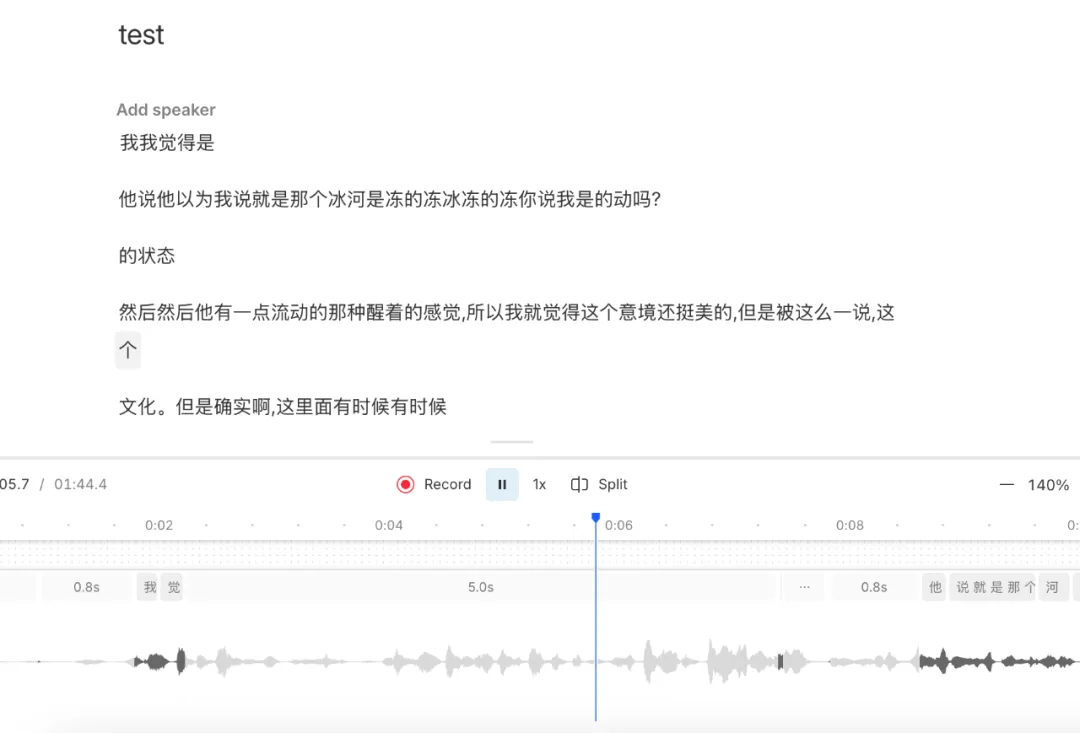
It also could not recognize non-speech audio signals. For example, background noise at the end had to be deleted manually.
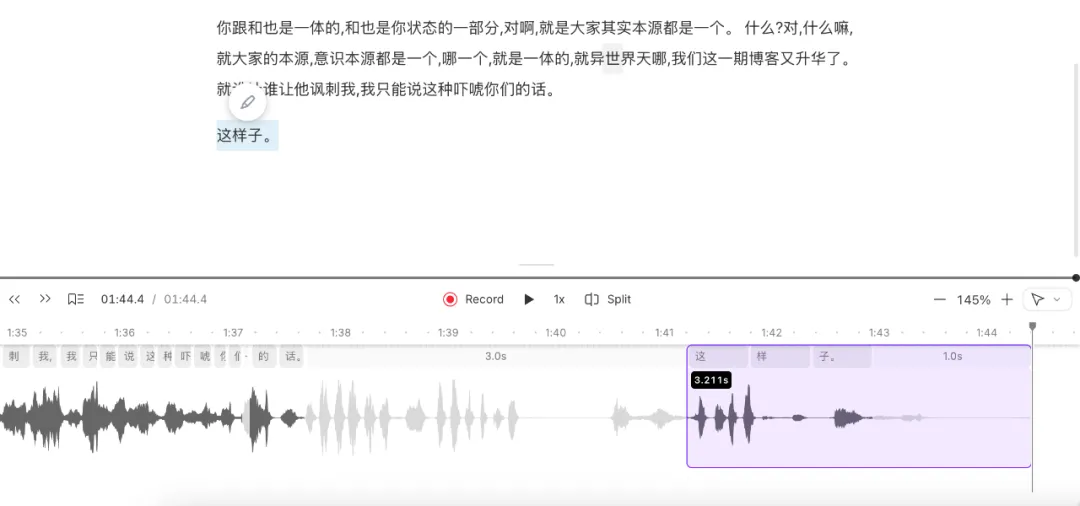
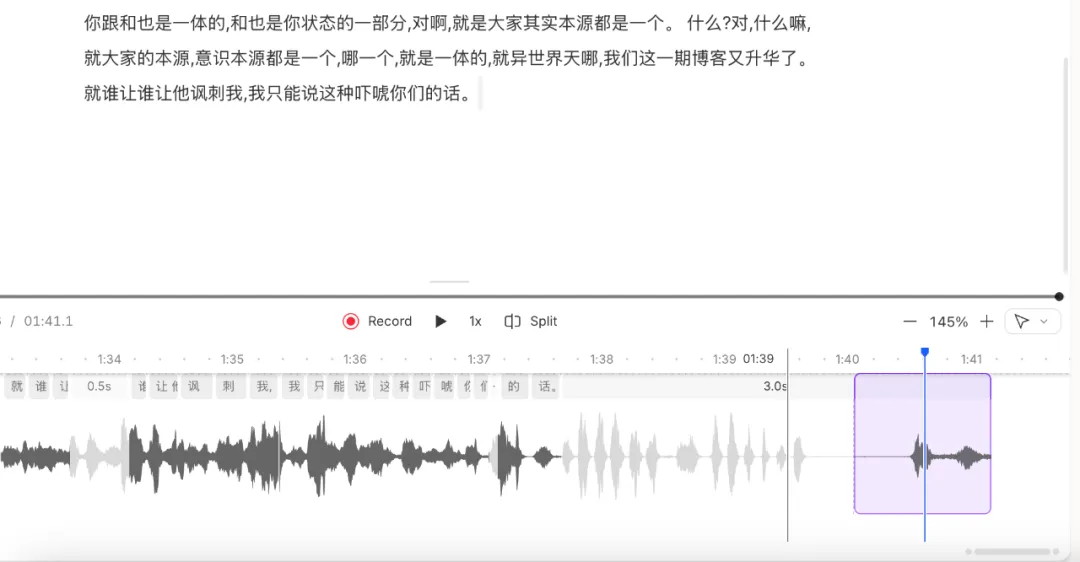
Jianying and CapCut, as products from Chinese companies, have a natural advantage with Chinese content. But what surprised me was that CapCut handled joins in Chinese audio better than Jianying. I am a Jianying SVIP user and have not paid for CapCut, but if I needed a product for editing audio, I would choose CapCut first.
Still, the AI editing tools on the market do not meet what I expect yet.
Maybe my ears are too sensitive. The breath between cuts, blank pauses, rhythm — the results from AI are always a little off.
It is even more obvious with Descript. It really made me collapse.
I understand that English and Chinese have many small differences. English filler words are definitely easier to deal with.
But I feel that AI editing tools need to consider DSP, digital signal processing, not only text recognition at the LLM level.
And the real bottleneck in AI audio right now is not model ability. It is training-data bias.
Descript and CapCut are trained on ‘standard podcasts’: clear hosts, clean backgrounds, stable speed. But audio in the real world is messy. People overlap, there is background noise, non-standard accents and dialects...
Of course, the ‘natural transitions’ I want are themselves hard to define. What counts as natural? A 0.3-second pause or a 0.5-second pause? It depends on context, the speaker's personality, the kind of content... This is a subjective optimization target. AI has little ground truth to learn from.
So perhaps the future solution for AI editing is not a ‘better general AI,’ but a hybrid workflow with humans in the loop: AI makes a rough first cut, a person adjusts the details, then AI learns from those adjustments and applies them in later co-working. It is a process of evolving together.
That also makes me ask a bigger question: why isn't there an AI made specifically for podcast editors?
Imagine a product like this: a timeline-based UI, adjustable sensitivity for breath detection, smart fade-ins and fade-outs, a ‘Match this pacing’ feature that learns the rhythm I like, and multi-speaker voice profiles...
Why doesn't it exist?
Maybe the potential TAM is not attractive enough, so VCs are not interested. But as a $20/month SaaS, it seems completely possible.
ChatGPT, Gemini, and Claude are all trying to be everything to everyone right now. But the real opportunity may be vertical AI assistants: deeply optimized for a specific use case, instead of piling up broad functions.
It is the same pattern as Cosmos vs. Pinterest:
ChatGPT/Gemini = Pinterest: broad and comprehensive
Future vertical AI apps = Cosmos: small but refined
4. Gemini and ChatGPT Live Mode
I once saw someone from the Gemini team actively collecting feedback on Xiaohongshu. I thought, finally, somewhere I can put what I have been wanting to say. I had been frustrated with Gemini Live Mode's three lines of captions for a long time.
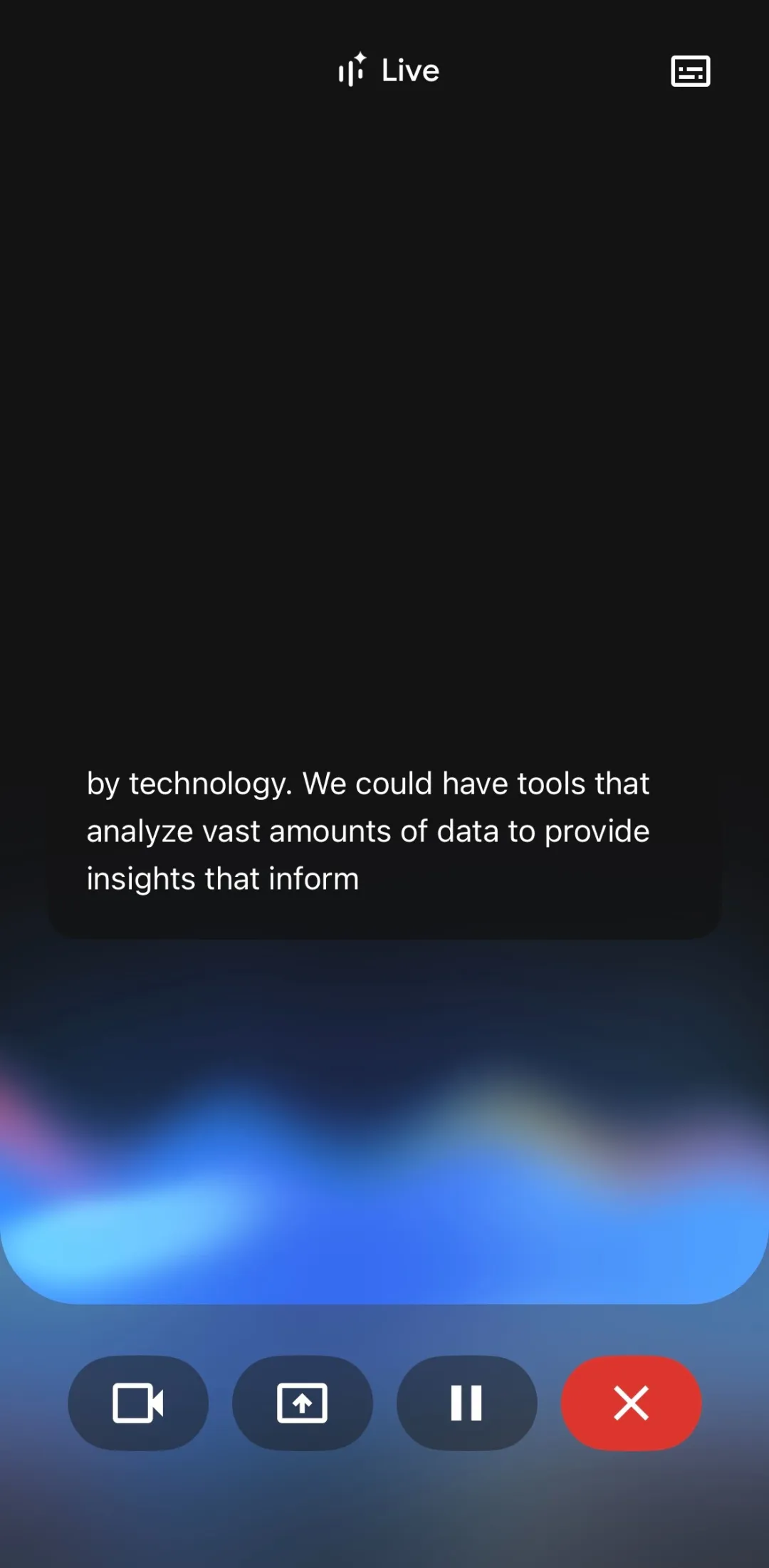
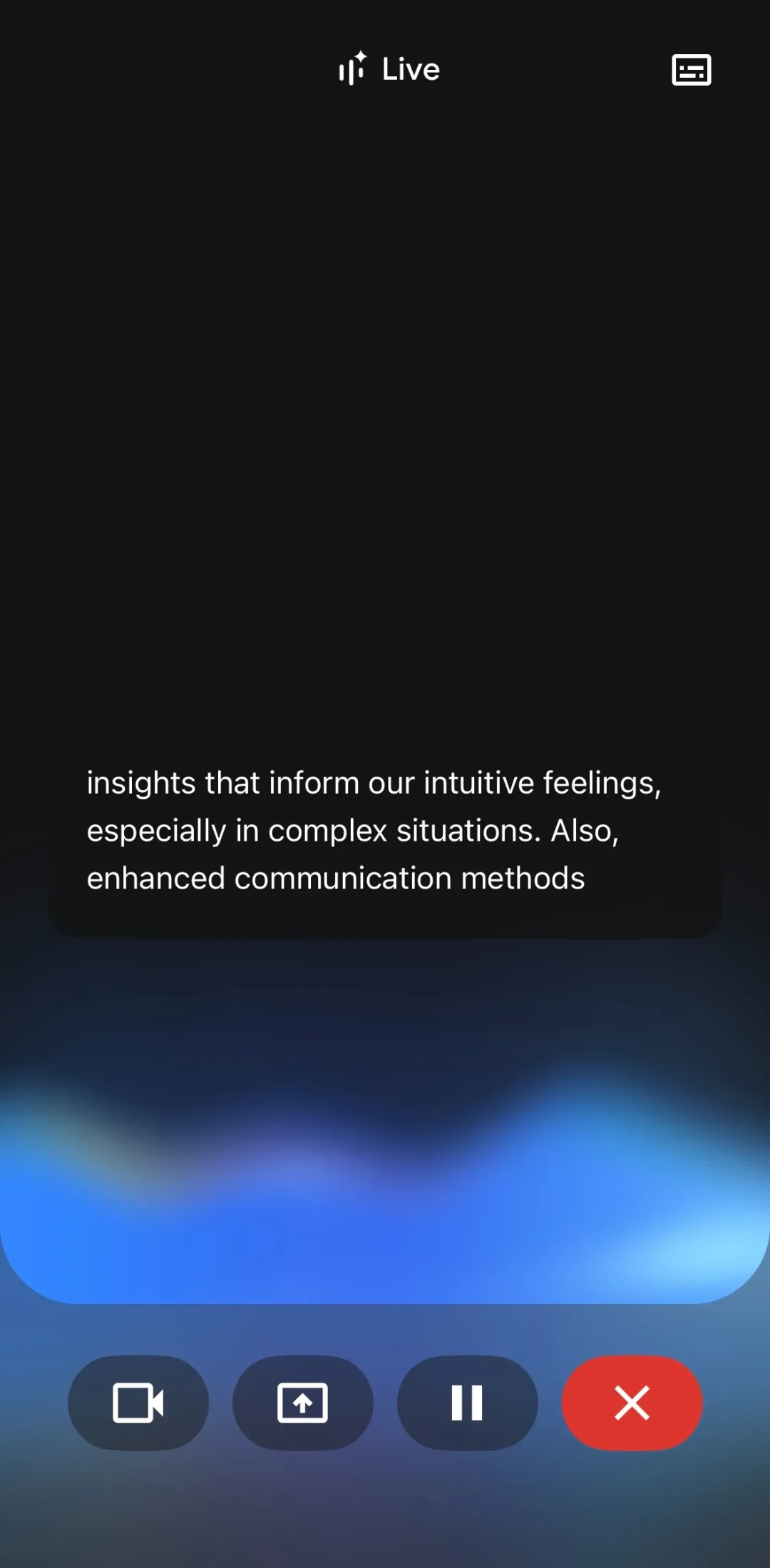

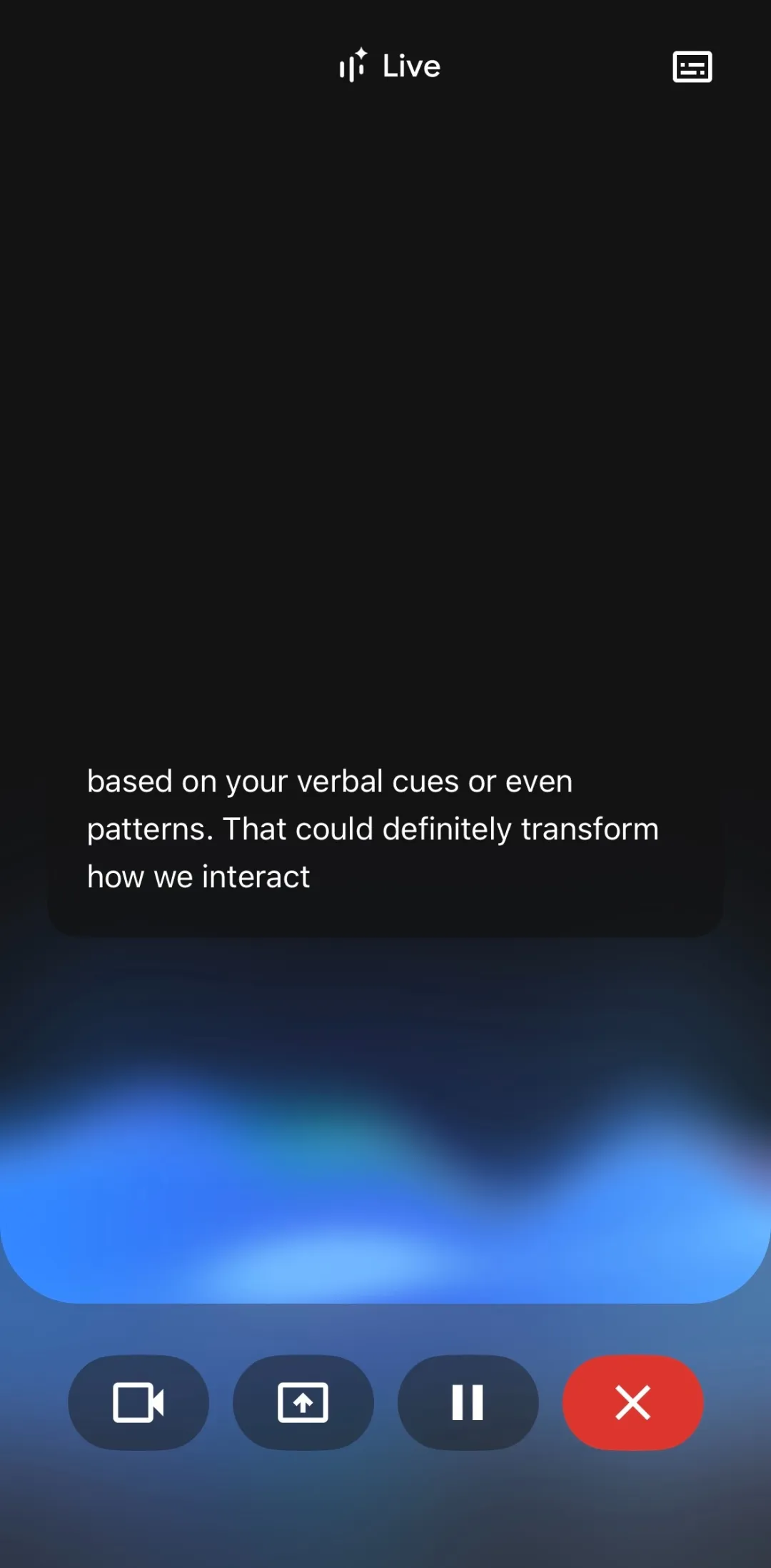
ChatGPT's design solved this pain point for me perfectly.
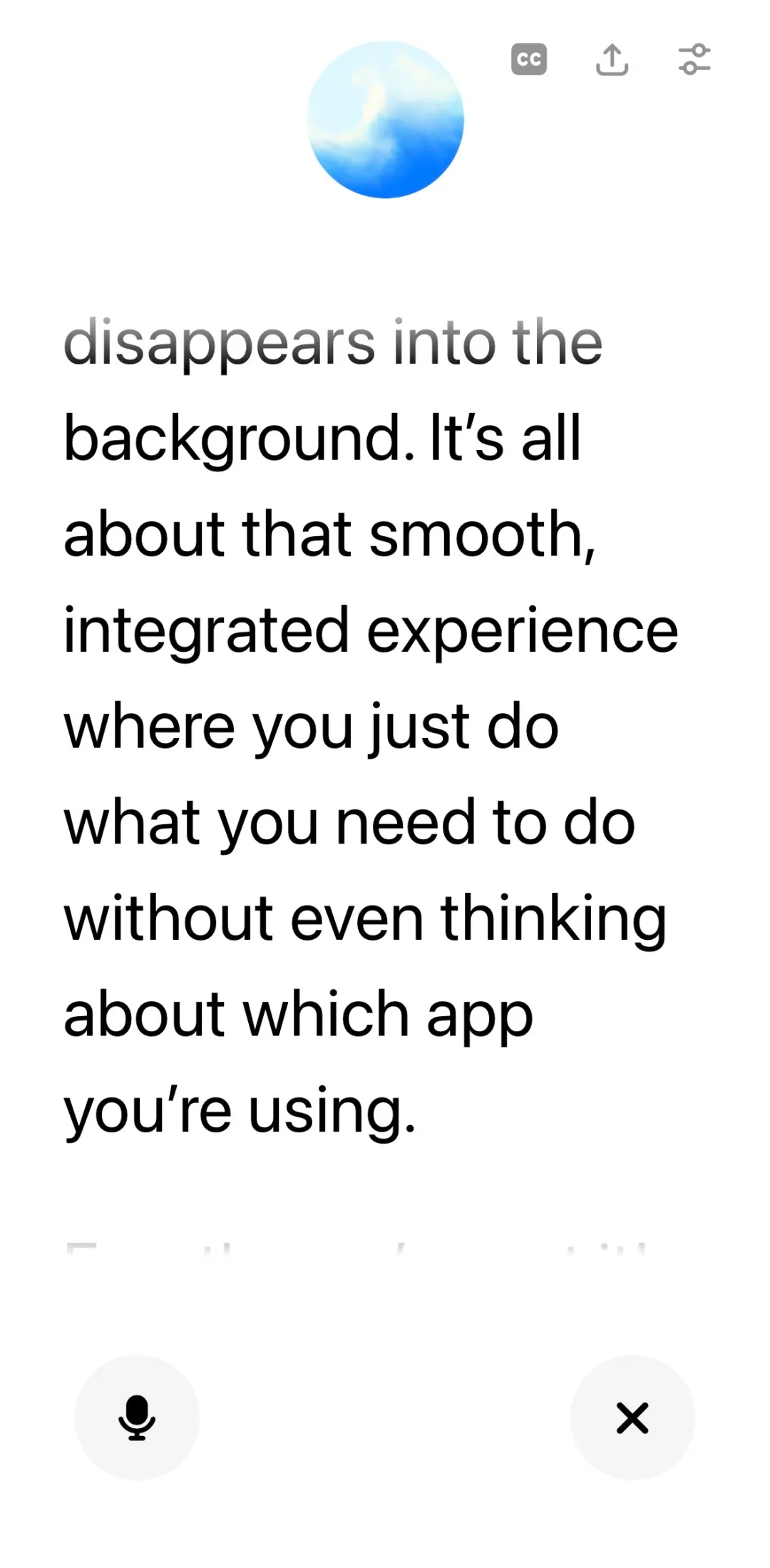
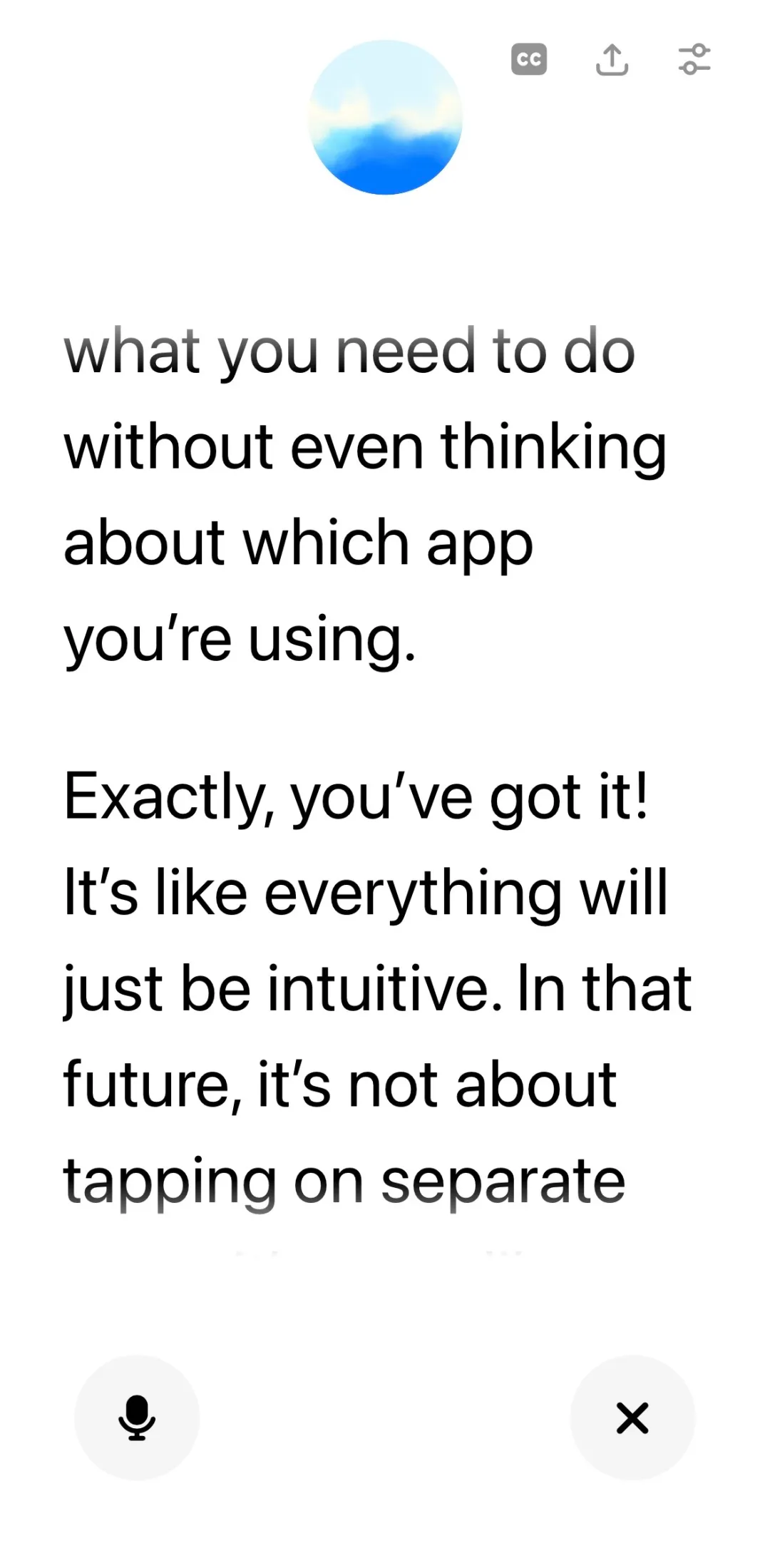
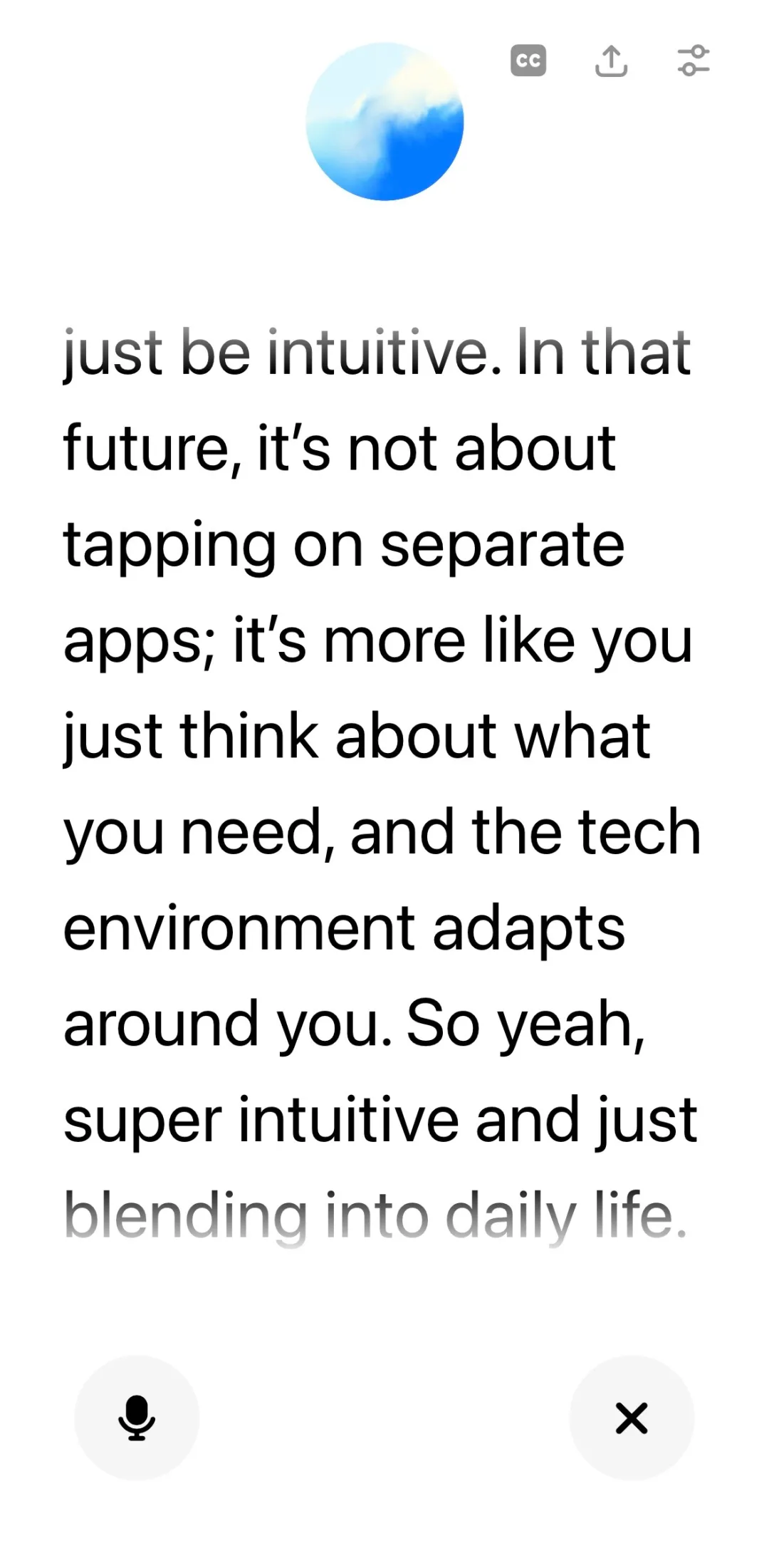
I kept wondering why it was designed as three lines of captions.
Maybe it is trying to create a sense of being present and focused? But I still feel it was designed for native English speakers, or people who use English fluently in daily life. Only they may not feel that three lines of captions add cognitive load.
One thing ChatGPT does less well than Gemini is that ChatGPT does not show what the user said on screen, while Gemini does. It even automatically improves the user's wording.
At first I thought this was a design flaw. Later I realized the two companies are optimizing for completely different use cases.
Gemini's three-line design simulates real-life conversation. Sound is immediate and cannot be replayed, so it forces users to stay with the present. Once you try to look back at previous messages, you leave that immersive language-interaction experience. It is also designed for hands-free, eyes-free situations: driving, cooking, running. Their north-star metric may be whether a user can complete a conversation without looking at the screen. Why three lines rather than another number may have something to do with the capacity of human short-term memory.
ChatGPT's full-screen transcription is designed for learning and record-keeping: language learning, interview preparation, acquiring knowledge. Unlike Gemini's three lines, a full screen lets users see the full context of a conversation. Earlier messages do not disappear from view as the conversation continues, so it does not interrupt a train of thought. That is useful when an interaction needs repeated checking of details.
Neither design is wrong. They are just serving different jobs to be done.
As someone who wants to learn and improve through Live Mode — for example, practising a foreign language or simulating an interview — I naturally lean toward ChatGPT.
There are probably quite a lot of people like me. But if we are all growth-driven people, we will find other tools too. Why keep fighting with Gemini or ChatGPT? 🤔
The problem is that there are too many tools. Testing alternatives costs time and energy. Even smart people can be lazy. We hope a product is either as capable as possible, or top-tier in one area. That saves time and energy.
Still, judging from recent trends, the real focus should be vertical AI with specialized UI:
1) AI for language learners: full-screen transcripts, a slow-down option that gives users control, such as scrollable captions, instant translation...
2) AI for drivers: voice-only interaction, awareness of the situation...
3) AI for podcast editors: waveform views, breath detection, smart fade-ins and fade-outs...
...and so on.
5. A pattern I noticed while writing
While thinking about these products, I noticed a pattern: AI is repeating the path social media took.
Social media evolved like this:
In the early 2010s, there were only a few general platforms: Facebook, Twitter, Instagram. Each one was trying to be everything.
From the middle and late 2010s until now, niche platforms appeared: Pinterest for visual discovery, Strava for athletes, Goodreads for readers, Cosmos for curated aesthetics...
AI today looks a lot like social media in the early 2010s:
There are only a few general AIs — ChatGPT, Claude, Gemini — all desperately adding functions: voice mode, image generation, code execution, web search, file uploads...
The result is bloated functions and UI compromise.
So I think AI will move in the same direction: vertical AI apps will emerge, each optimized for a specific use case.
This pattern applies not only to software, but to hardware too:
1) Computers → PC vs. Mac → gaming PCs vs. workstations vs. Chromebooks...
2) Phones → iPhone vs. Android → gaming phones vs. camera phones...
3) Wearables → Apple Watch → fitness bands vs. sleep trackers...
Understanding this pattern helps us see what to evaluate in a product: instead of only asking ‘which is better,’ ask ‘what situation is it optimized for?’
It can also help us predict the market: vertical specialization is unavoidable.
And maybe find opportunities too: which niche markets are still waiting to be served?
6. A small insight
Back in the Chinese context, I have a vague feeling that the Chinese AI ecosystem and the English-language AI ecosystem are taking slightly different paths.
I had thought China was still in the stage of a ‘general AI war’ — ERNIE Bot, Doubao, Kimi, Zhipu Qingyan, Qwen, DeepSeek... almost all trying to become ‘China's ChatGPT.’ But after looking into it, I found that vertical AI in China is developing much faster than I expected.
According to data from China's National Development and Reform Commission, by the first half of 2025, 439 large models had been registered in China, covering more than 30 industries including healthcare, agriculture, education, manufacturing, and finance. In healthcare, intelligent doctor assistants already cover 30 provinces and 30,000 primary-level medical institutions. In agriculture, smart farming platforms have been used 6 billion times.
Compared with consumer-facing AI, progress for businesses is more visible. Dipu Technology, which listed at the end of October this year, is a good example. It provides ‘Data + AI’ solutions for companies and serves 245 clients in consumer retail, manufacturing, healthcare, transport, and other industries. Its 2024 revenue grew 88%, and its stock rose more than 150% on its first trading day. It has been called the first listed enterprise-level large-model AI application company.
There are many other factual data points: Huawei Cloud's Pangu models lead market share in government, industry, and finance; intelligent customer-service agents have a penetration rate above 70%; AI quality-inspection systems can reach 99% accuracy...
By ‘taking slightly different paths,’ I mean that in AI development, the English-language ecosystem seems to move from general to vertical, while the Chinese ecosystem seems to push general and vertical products forward at the same time. The paths differ, but the direction is the same: both are moving toward vertical specialization. This may have to do with the maturity of their B2B and consumer markets, policy conditions, and industrial foundations.
Echoing what I said earlier: when will consumer AI made specifically for Chinese podcast editors or language learners appear? For the former, I can already see early product signals, but the results still do not satisfy me. If it is worse than Jianying, I feel it is... really bad 😂 As for the latter, honestly, I have not come across it within my view yet.
DeepSeek's open-source and low-price strategy may speed up vertical specialization. When startups can use an existing, affordable base model, they can focus on vertical applications. They do not need to train an LLM from scratch. They can stand on the shoulders of giants, claim a piece of high ground, and try to become good enough in one specific area.
So my summary is this: not every product needs scale; a niche position can be a valid strategy. Different products optimize for different kinds of value, and there is no absolute ‘best design.’ The opportunity in AI right now is vertical specialization, not building another foundation model. Technological evolution hides patterns we can predict, and understanding those patterns can reveal possible opportunities. In Chinese AI, the consumer side is still a blue ocean. Though people also complain that consumer users in this market are not willing to pay much... Different people, different needs. The product still has to be good! 🤔
Before, when I came across an app or product, my first feeling came from whether it was useful, and I would quietly score it in my mind. Writing this made me realize that good product thinking cannot stay at ‘this is useful’ or ‘this is not useful.’ It should also understand why a product made this choice, and what tradeoff sits behind it.
Maybe I have not expressed it perfectly, but I will stop this note here for now.
If I missed anything, I will add to it later.