Of course, I mean AI product managers who understand what an AI-native product is in the AI era.
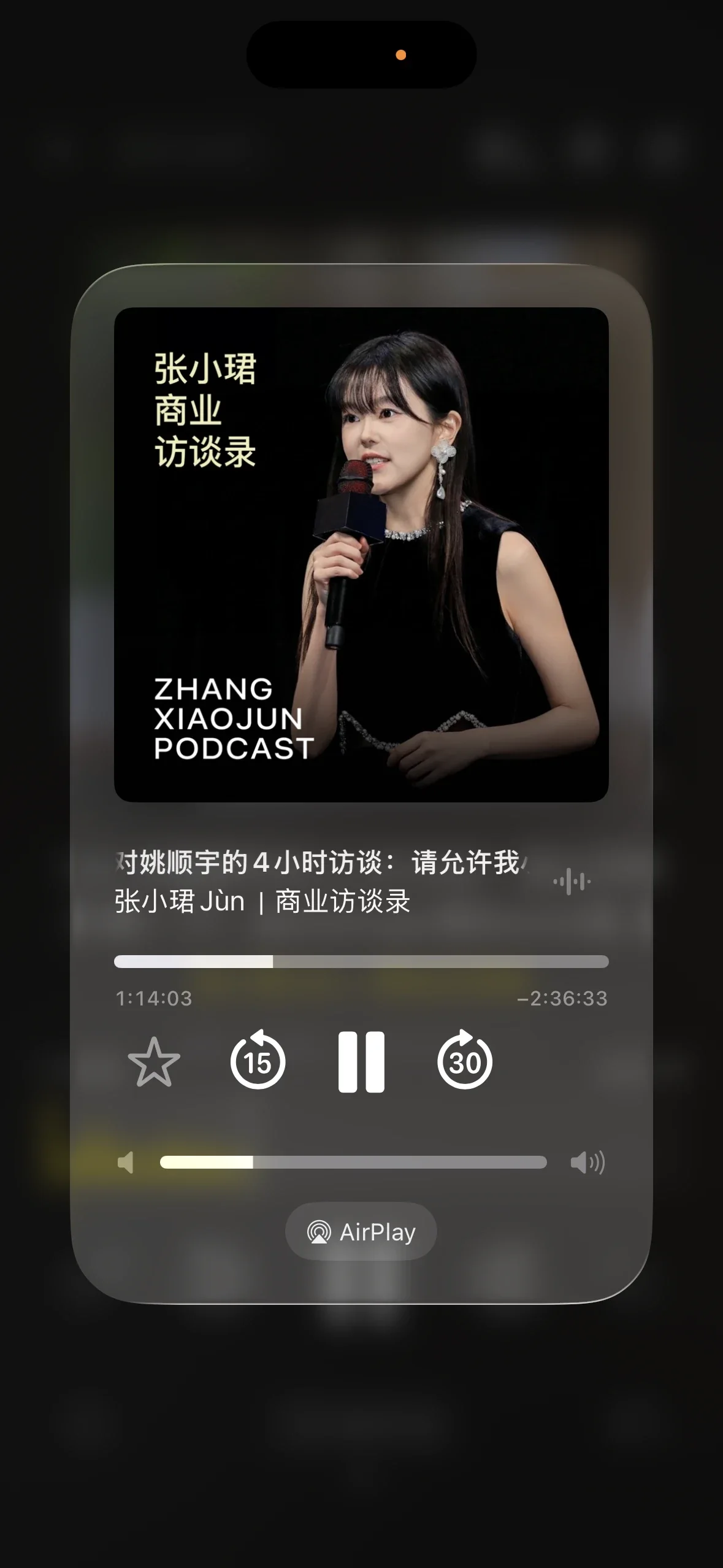
Here are some notes I took while listening to this podcast episode:
1️⃣ Large models are similar to thermodynamics in the eighteenth century. At the microscopic level, we have no idea exactly how they work. But at the macroscopic level, we have found empirical patterns. In a system like this, the standard for judging right and wrong is experimental feedback. It is objective.
This made me think about why people say the most AI-native products today are coding products: code has the clearest feedback signal (it works or it does not), and the evaluation criteria are the most objective. But for things like designing a product with smooth human-computer interaction or defining what makes a good product, AI still cannot replace people for now.
2️⃣ The analysis of Anthropic and Google was interesting: top-down control by a deeply technical leader, or bottom-up freedom to innovate.
Having everyone avoid useless work and focus only on putting things into practice and moving them forward really is the most efficient way to build products. No matter when, where, or with whom, doing the work matters more. If the values at the top set the right direction too, that is even better.
So perhaps we can say this: a technical leader who can keep a team moving together does not have to be purely a technical person, but they do have to be technically strong.
3️⃣ Chatbots are an extension of search engines. It reminded me of how ChatGPT used to feel to me: an advanced AI version of Google (though after 5.5 launched, it became incredibly, incredibly useful). I thought automatically bringing memories across conversations into an answer meant context engineering. In reality, it was still searching and citing.
Some recent complaints about NotebookLM:
1) The agent is too flattering and too willing to follow the user. Even when the opening message is only a few words, that response can affect the user's self-perception at least a little.
2) There is a fixed waiting period before an answer appears. During generation, I cannot pin the message so I can read while it continues. I have to wait for the whole answer, then scroll from the bottom back to the top. Whether streaming generation can stay almost in sync with the speed at which a user's brain and eyes receive information also matters.
3) Each project is an isolated knowledge base. This brings us to the subject of this note: we need to build a world for the agent and let it live in a shared environment. As a user, I need the agent to have continuous memory of me and to keep updating how it models me.
In other words, context engineering is not only an engineering problem. It is also a human-computer interaction problem—a problem of “how to understand a person.”
So what will the GUI of the future be?
(Electronic “skin” that can distinguish pressure from a caress now exists. That is pretty wild too 🤔
4️⃣ Digitize yourself. In the future, the physical body will handle the offline world, and the digital self will handle the online world. (An irresponsible prediction.