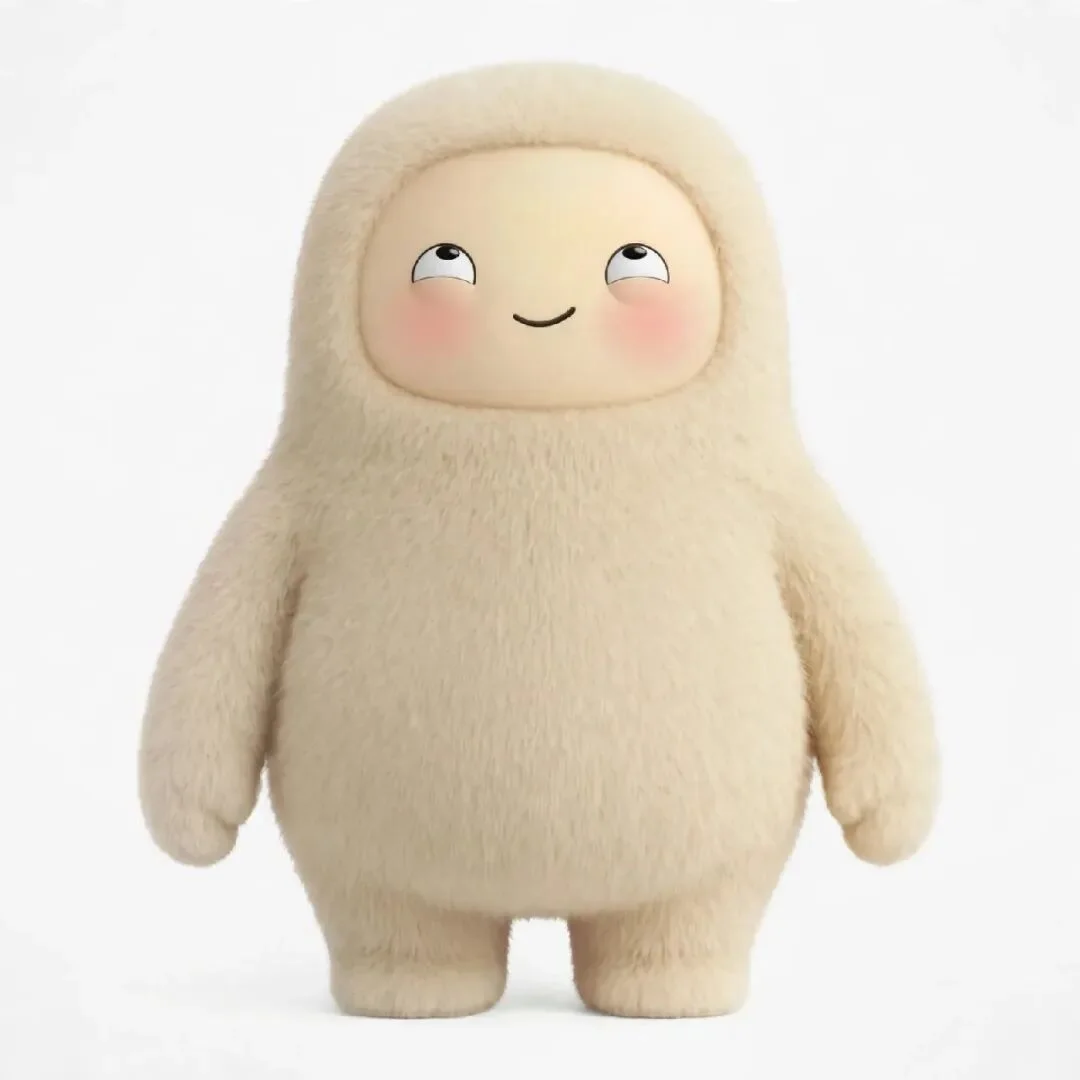
Lately, I’ve been using Muse, and I’ve noticed a strange reaction in myself: I don’t quite have the heart to put it to work.

Its mascot (its name is Jolly!) is just so cute! How cute? Look at the way the flesh on those chubby little arms jiggles as it types with its headphones on, those little eyes blinking, that oh-so-serious, focused look when it’s working, and the way it plays with colorful balls… I even! Feel a little guilty when I ask Muse to do something for me, as if asking it to do a bit more were making it work overtime, and asking for a few more things were mistreating it… The way I talk to Muse (to get it to work) is actually no different from how I talk to other AI, but with Muse, I feel that reluctance more clearly. And I find myself wondering, almost without thinking: should I use it a little less? 🥺
This reminds me of AirJelly.
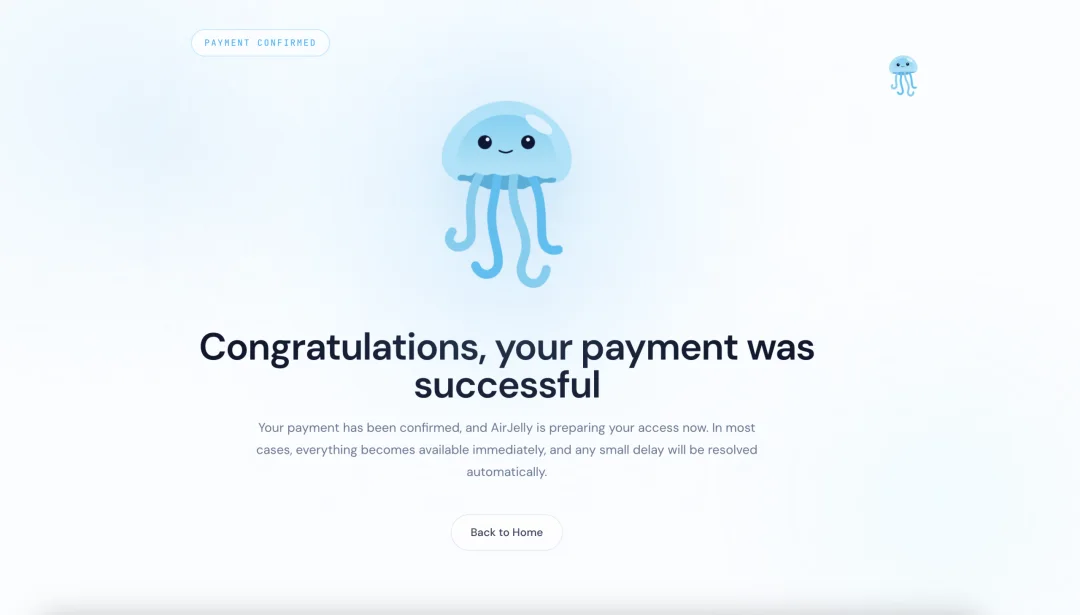
Back in April, I learned about it through a podcast and couldn’t help wondering what kind of product it was (the founder is pretty charming, too, actually). I opened its website and was won over by how cute the branding was. After I installed it, that little pale blue jellyfish floated around my desktop, as if saying, “I’m right here, keeping you company while you work.” I even went out of my way to praise how cute it was in an article. Once, I asked it to help me write a script. It worked hard on it, but the script wouldn’t run. I described the problems I’d run into and possible ways to solve them. It kept fixing things, only to run into other problems… Then I switched to another Agent, and it was done in no time.
So why would I still go to AirJelly?
I’ve said before that I’m very practical about the products I use. Most of the time, I keep using a product because it offers something I can’t get from another one. But back to writing scripts: most Agents can do that. If they can do it even better, what advantage does AirJelly have? I used to be very invested in the idea of understanding users across different contexts and capturing & recording context, and I tried a few things myself. I’ll write more about that when I get a chance~
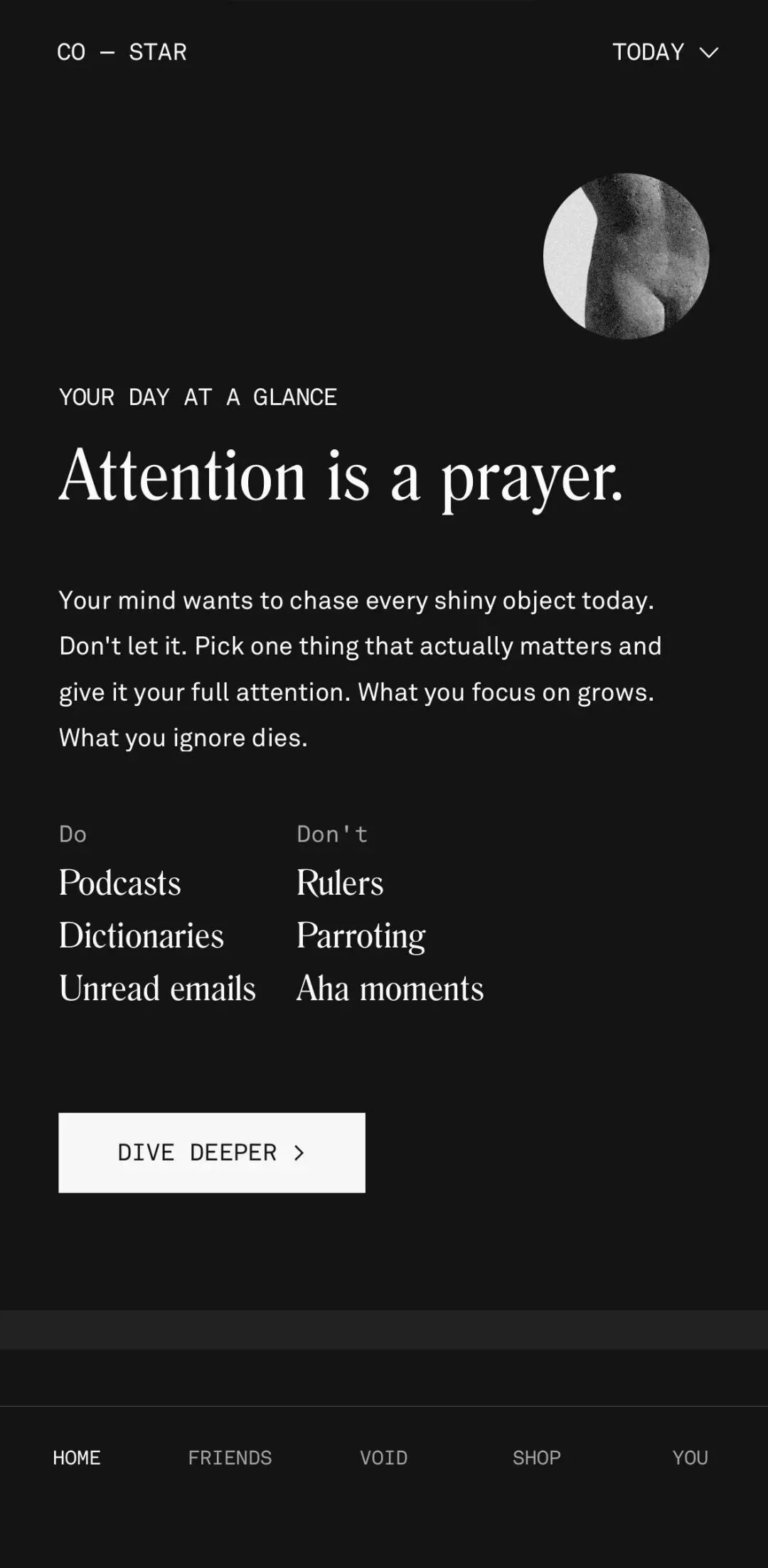
Although AirJelly hasn’t yet met my expectations as a tool, here’s the interesting part: even now, whenever I think of “good branding,” that little pale blue jellyfish is still the first thing that comes to mind. It’s like how I still feel that surprise and delight about Co-Star’s default profile picture. But to be honest, I’m not a user of it.
01 A cute mascot brings a sense of relationship
So I got curious: where exactly did that reluctance come from?
After thinking about it for a long time, I think it might go something like this: a cute character can define my relationship with a product before I even notice. And that relationship comes with unspoken rules. For example, when we have pets, we take care of them; when we use tools, they serve us.
No matter how cute a virtual pet is, that feels perfectly natural to me, because taking care of it is how we use it in the first place. But tools are different. Naturally, the more a tool is used, the more value it provides. Yet a cute mascot quietly brings that sense of “taking care of it” into its interactions with users. And that leads to the tug I feel with Muse: the pickier I am with it, the harder I “work it,” the more wrong it feels… It’s so interesting to dig into what’s behind these feelings!
So I really! Want to know: why would a team building a tool-oriented product (as I understand it) design such a cute mascot? What’s the thinking behind it? Or is it that, when people start building products, they never mean to draw a clear line between “my product is more of a tool” and “my product is more of a virtual pet” in the first place?
02 What else can a cute mascot bring?
I also took these feelings to Claude, and together we came up with four possibilities. But these are all guesses! I really don’t know what any of the teams were actually thinking. (And I’m really, really curious!)
First, making invisible work visible. I wrote about Muse and Dots in early October: their mascots change appearance with their work status. When an Agent works in the background, we can’t see what it’s doing, so this changing character becomes a window for “monitoring” its work. Digging further back, I also found that Microsoft Agent was already using animations to show its status in 1997, though the results left something to be desired. In this case, “cuteness” conveys information. It serves the tool itself.
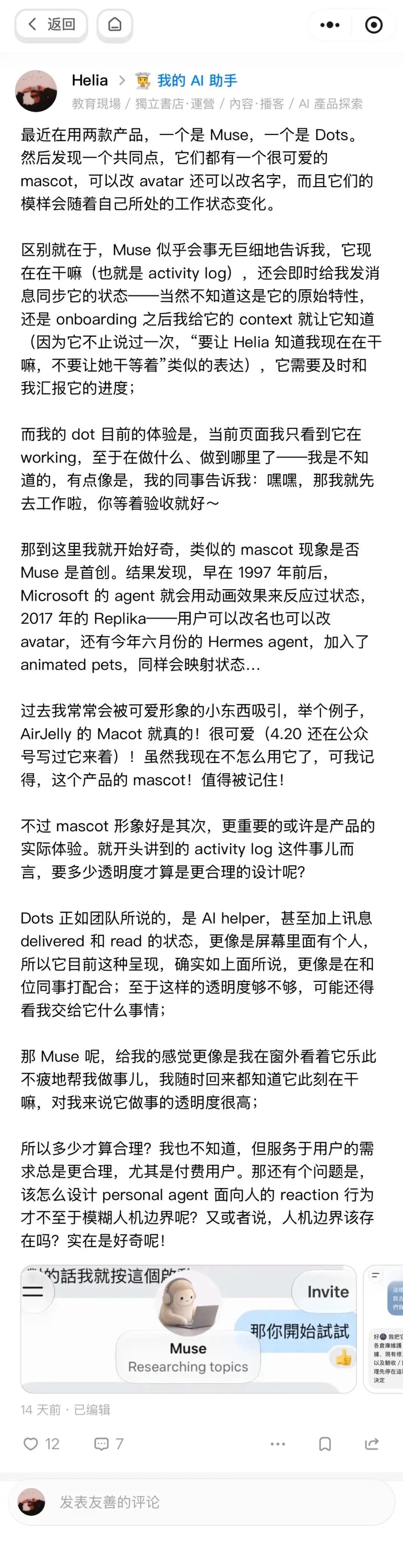
Second, making mistakes easier to forgive. Imagine a little cutie messing something up. Who could get angry? If it were me, I might get so mad I’d grit my teeth and pound on the keyboard, but then I’d hold my own hand back. I couldn’t bear to let the keyboard get “hurt.” I’d have to pay for it! All I could do would be to say silently to myself, “Ugh, you’re so annoying”… I’m kidding. But it’s hard for me to really get angry at it. My soft spot for it always gets there before my anger does, pleading on its behalf.
This reminds me of Poke: before it had even done the job properly, it was already acting as though it were admitting fault with the utmost sincerity and blaming itself terribly… All I did was snap, “That’s classic shitty-boyfriend talk!!” “Replacing actual alignment with a sense of relationship, and replacing changed behavior with a performance of admitting fault.” I know it feels wronged, too… I guess the trouble is that something so cute had to meet someone like me, who won’t let even a detail like this slide. (I also picked up the idea of having a website change over time from Poke! Some AI apps do something similar on their home screens, too, like Claude!)

Third, making it easier to grant access to private information. This was something I hadn’t thought of at all. When Claude suddenly pointed it out, I paused for a moment, both surprised and delighted. AirJelly was constantly recording my screen and tracking my mouse. To build up context and understand me, it had to “see” what I was doing on my computer. But if a cold, impersonal monitoring program had asked for the same permissions, I really can say with absolute confidence that I wouldn’t have been so “generous.” Really! My guard would have been completely different.
Which is why it wasn’t until its screen recording made things freeze while I was editing audio in Audition that I really realized for the first time: this little jellyfish’s eyes had been open all along. Then I turned off its screen-recording permission. All I could do was silently explain that, so I could keep working normally, I had no choice but to make it take some time off for now. (For the record: we both love working!)
But I don’t think this design necessarily comes from bad intentions. It does, though, make people more willing, even happy, to hand over their context, which means handing over their privacy. Our guard drops quite a bit.
Fourth, making the brand memorable. AirJelly has already done this perfectly with me. And there’s Co-Star, which I keep thinking about. Though I should be clear here: what stays with me isn’t its mascot, but its default profile picture. That’s something that sets it apart from other products, and it also helps shape its brand image.
03 Could it bring something else, too?
After looking at those four possibilities, I realized there was another question I could be curious about: could the mascot itself be conveying something else?
It tells me what the agent is doing and how far along it is… In that case, it’s “speaking for” the tool’s actions, and “cuteness” is a softer way of presenting them. But if its presence makes me feel bad about putting it to work, then it has brought the sense of a human-pet relationship into a tool. The cost might be that I can’t bear to use it as much. It might be that it stretches my patience a little further and makes me a little less quick to get angry. Or it might be that I let down some of my guard about handing over my privacy…
Having typed this far… I throw up my hands. Ah, I still really like that little pale blue jellyfish that floats around my desktop and closes its eyes… And I still can’t bear to make Muse work overtime. 🥺 But this has also given me something else to work on. I want to see what role “cuteness” itself plays in a product, or in shaping a brand’s image, what else it can be used for… and any other possibilities.
I have a feeling that, as more and more agents move onto our desktops, watch our screens, and help us remember what happens on our computers day after day… they’ll appear in cute forms more and more often.
By then, you and I, having read this article, might understand a little more about this “cuteness,” and be able to think more clearly about whether our feelings for it have been designed or are something we freely choose to give~
Of course, long live “cuteness”! Being cute is reason enough! Really! No need to analyze it endlessly like I do… OK, wrapping up!