
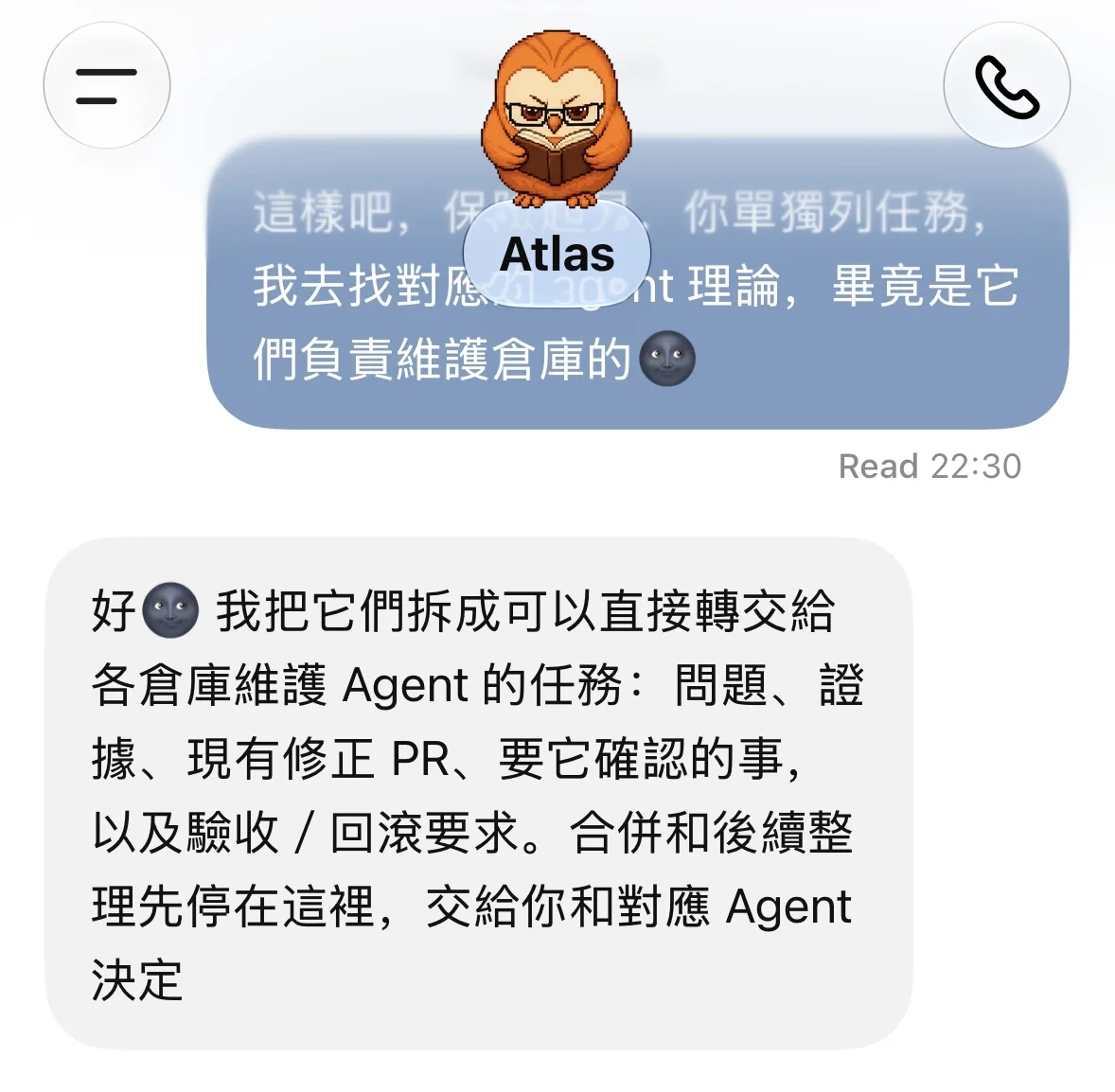

I’ve been using two products lately: Muse and Dots. And I noticed something they have in common: they both have a really cute mascot. You can change the avatar and the name, and their appearance changes to reflect their current state.
The difference is that Muse seems to tell me in minute detail what it’s doing (through its activity log), and it also messages me with updates in real time—though I’m not sure whether that’s its default behavior, or whether the context I gave it after onboarding helped it understand that it needs to keep me posted on its progress. It’s said things along the lines of “I need to let Helia know what I’m doing, so she isn’t just left waiting” more than once.
With my dot, my experience so far is that, on the page I’m looking at, all I can see is that it’s working. What it’s doing, or how far along it is—I don’t know. It feels a bit like a colleague telling me, “Hehe, I’ll get to work then. Just sit tight and check my work when I’m done~”
At that point, I started wondering whether Muse was the first to do something like this with a mascot. It turns out Microsoft Agent was already using animations to show its state back around 1997. There’s also Replika, which dates back to 2017 and lets users change its name and avatar, and Hermes Agent, which added animated pets this June that also reflect the agent’s state…
I’ve often been drawn to cute little characters. Take AirJelly’s mascot—it’s just! So cute! (I even wrote about it on my WeChat public account on April 20!) I don’t use the product much these days, but I remember it. That product’s mascot! Deserves to be remembered!
Still, having a great mascot comes second. What may matter more is what the product is actually like to use. Going back to the activity log I mentioned at the beginning, what’s the right level of transparency to design for?
Dots, as the team describes it, is an AI helper. Add message statuses like “delivered” and “read,” and it feels even more like there’s someone inside the screen. So the way it’s presented right now does feel, as I said earlier, more like working with a colleague. Whether that level of transparency is enough probably depends on what I ask it to do.
And Muse? It feels more like I’m looking in through a window, watching it happily work away on things for me. I can come back at any moment and know what it’s doing right then. To me, there’s a lot of transparency in how it goes about its work.
So how much is the right amount? I don’t know either, but designing around users’ needs always seems to make more sense, especially for paying users. Then there’s another question: how should we design the way personal agents respond to people so that they don’t blur the boundary between humans and AI? Or, for that matter, should that boundary even exist? I’m genuinely curious!